


Related search
Solar Panels
Bag
Beanies
Electrical Equipment
Get more Insight with Accio
Bunnings $26K Tiny Homes Transform Australia’s Housing Market
Bunnings $26K Tiny Homes Transform Australia’s Housing Market
13min read·James·Feb 7, 2026
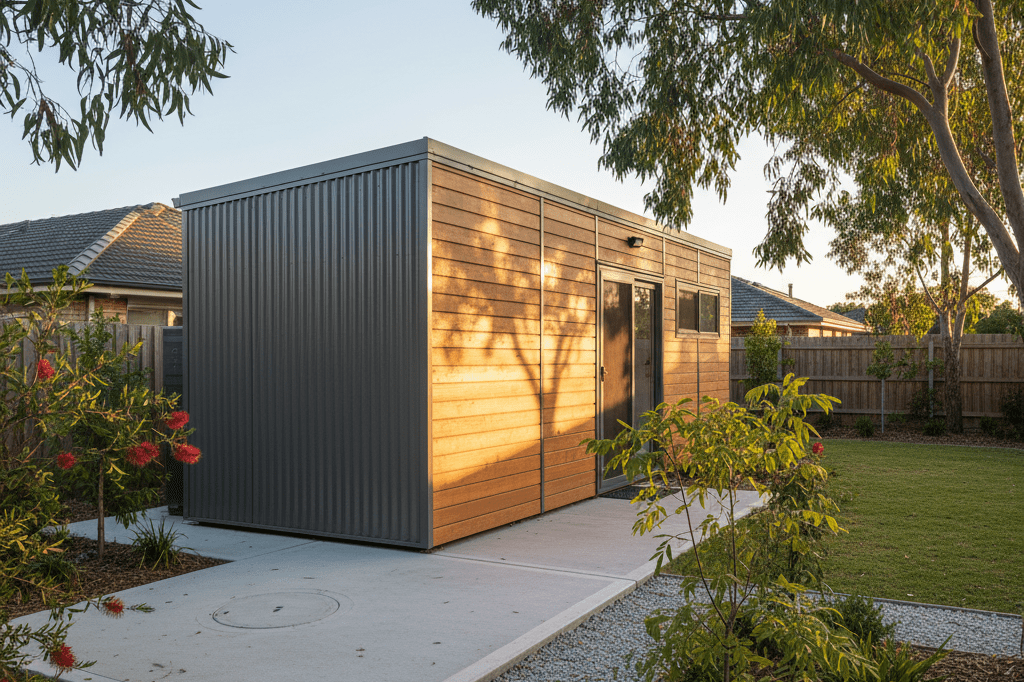
Bunnings’ February 2026 launch of DIY flat-pack studio pods marked a significant shift in Australia’s housing alternatives market, with entry-level units starting at approximately $26,000. The retail giant’s specific 5.4 m × 3.6 m studio model, priced at $27,157, targets consumers seeking versatile living solutions without the complexity of traditional construction. These pre-engineered structures represent a growing segment where factory-built components meet consumer assembly, creating accessible pathways to additional dwelling space.
Table of Content
- Affordable Tiny Homes: The $26K Backyard Revolution
- Market Trends Driving the Prefabricated Housing Boom
- Business Strategies for Retailers in the Modular Housing Market
- Leveraging the Tiny Home Trend for Sustainable Business Growth
Want to explore more about Bunnings $26K Tiny Homes Transform Australia’s Housing Market? Try the ask below
Bunnings $26K Tiny Homes Transform Australia’s Housing Market
Affordable Tiny Homes: The $26K Backyard Revolution

The strategic positioning of these Bunnings tiny homes as temporary or ancillary structures rather than permanent dwellings opens multiple revenue streams for property owners. Ryan Baker, Bunnings Chief Operating Officer, emphasized on February 4, 2026, that “they provide an affordable way for customers to add functional space to their homes.” The modular design accommodates diverse applications including home offices, guest accommodations, teenage bedrooms, and short-term rental opportunities through platforms like Airbnb, maximizing the return on the initial $26,000-$27,157 investment.
Bunnings DIY Studio Pods Information
| Model | Dimensions (m) | Price (AUD) | Assembly Time | Usage |
|---|---|---|---|---|
| Black Studio | 4 x 2.4 | 42,900 | 2-3 days | Home office, creative studio, guest room |
| Standard Studio | 2.7 x 2.4 | 26,100 | 2-3 days | Art studio, teenage retreat, backyard addition |
Market Context: How DIY Flat-Pack Studio Pods Are Disrupting Living Spaces
The emergence of DIY structures in mainstream retail channels reflects broader consumer demand for housing flexibility and cost control. Matt Decarne, founder of Elsewhere Pods, noted on February 4, 2026, the growing interest due to “the short time frame it takes to build and the ease in which it can be built,” highlighting speed-to-market advantages over conventional construction. Factory-manufactured components eliminate weather delays, reduce labor costs, and provide predictable assembly timelines typically ranging from 2-5 days for experienced DIY builders.
Price Point Analysis: Breaking Down the $26,000-$27,157 Starter Costs
While the advertised $26,000-$27,157 price point represents the core structure cost, buyers must account for additional expenses that can double or triple the total project investment. Site preparation, ground works, utility connections for power and water, compliance costs, permits, and land ownership requirements add substantial costs beyond the initial purchase. Comparative analysis shows Elsewhere Pods’ 4 m × 2.4 m unit at $42,900 demonstrates premium pricing for smaller footprints, indicating significant variation across manufacturers and specifications.
The cost-per-square-meter calculation reveals Bunnings’ 19.44-square-meter studio at $1,396 per square meter, while Elsewhere Pods’ 9.6-square-meter unit reaches $4,469 per square meter. These figures exclude installation, utilities, and compliance costs that typically add $15,000-$35,000 depending on site conditions and local requirements.
Consumer Appeal: Multiple Use Cases From Home Offices to Rental Income
Secondary dwellings serve multiple demographic needs, particularly addressing intergenerational housing challenges where the median age of first-home buyers reached 34-37 years in 2025 while children left home at ages 23-24. These modular construction solutions provide interim housing for adult children, elderly parents, or generate rental income to offset mortgage payments. The versatility of these structures allows property owners to adapt usage based on changing family circumstances or market opportunities.
Market Trends Driving the Prefabricated Housing Boom

Australia’s prefabricated construction sector reached A$12.91 billion in valuation during 2026, positioning it for sustained expansion amid national housing supply challenges. The sector’s 7.88% projected annual growth rate reflects increasing acceptance of off-site construction methods, though current adoption remains below 8% of total construction activity. This contrasts sharply with markets like Sweden, where modular construction dominates detached housing production, indicating substantial room for Australian market development.
Industrial-scale cost reductions depend heavily on high-volume, repeatable production cycles that most Australian manufacturers have yet to achieve. Current production limitations, with most domestic manufacturers building only a handful of units annually, prevent meaningful economies of scale that could drive consumer prices below the $26,000 threshold. Elsewhere Pods’ reported $9 million in sales demonstrates strong consumer demand despite regulatory uncertainty surrounding residential classification of these DIY structures.
The $12.9 Billion Prefab Construction Opportunity
Australia’s prefab construction industry sits at an inflection point where consumer demand significantly outpaces manufacturing capacity and regulatory framework development. The National Housing Supply and Affordability Council projects Australia will deliver approximately 938,000 dwellings by 2029, falling short of the federal government’s 1.2 million target by roughly 262,000 homes. Alternative projections from The Conversation estimate a 200,000-300,000 home supply-demand gap, creating substantial market opportunity for secondary dwellings and modular construction solutions.
Current manufacturing limitations constrain sector growth, with most Australian prefab producers operating at small-batch scales incompatible with industrial cost reduction strategies. Sweden’s successful transition to majority modular construction in detached housing demonstrates the potential for factory-built solutions, but requires coordinated policy support, industrial-scale investment in manufacturing, workforce training, and streamlined approval processes to achieve similar penetration rates in Australian markets.
Regulatory Landscape Across Australian States
Queensland and Victoria have implemented progressive regulatory frameworks that relax planning and building rules for secondary dwellings, creating more favorable environments for modular construction adoption. These jurisdictions recognize the role of ancillary structures in addressing housing supply constraints while maintaining safety and amenity standards. However, many other locations continue classifying these structures as non-compliant with full residential building standards, limiting their deployment and financing options.
The regulatory patchwork across Australian states creates market uncertainty for manufacturers and consumers, with compliance requirements varying significantly between jurisdictions. Building code interpretations, permit processes, utility connection standards, and land use classifications differ substantially, requiring buyers to navigate complex approval pathways before installation. This regulatory inconsistency constrains market development and prevents manufacturers from achieving standardized production processes that could reduce costs and improve quality control.
Business Strategies for Retailers in the Modular Housing Market
Retailers entering the modular housing sector must develop comprehensive business strategies that extend far beyond simple product sales to capture the full market opportunity. The $26,000-$27,157 base price point for Bunnings’ studio pods represents only the entry threshold, with total project costs often reaching $50,000-$70,000 when including site preparation, utilities, and compliance requirements. Smart retailers recognize that customers need integrated solutions rather than standalone products, creating substantial revenue opportunities through strategic service bundling and partnership development.
Successful market penetration requires retailers to position themselves as solution providers rather than product distributors, addressing the complex ecosystem surrounding modular housing deployment. The regulatory patchwork across Australian states creates significant customer confusion, while technical requirements for foundation work, electrical connections, and permit navigation present barriers that many DIY consumers cannot overcome independently. Retailers who develop expertise in these complementary services can command premium margins while building customer loyalty through comprehensive support offerings.
Strategy 1: Total Solution Packages Beyond the Base Kit
Bundle offerings that combine pods with site preparation and utility connections represent the highest-margin opportunity in modular housing retail, with service components often generating 40-60% gross margins compared to 15-25% on basic structures. Successful retailers partner with local contractors to provide turnkey solutions including foundation work, electrical installations, plumbing connections, and permit assistance, transforming a $27,157 pod sale into a $50,000-$80,000 project. These comprehensive packages eliminate customer uncertainty while creating predictable revenue streams through established contractor relationships and standardized pricing structures.
Service integration strategies must address the technical complexity that prevents many consumers from proceeding with modular housing purchases despite initial interest. Site preparation costs ranging from $5,000-$15,000, electrical connections averaging $8,000-$12,000, and permit fees of $2,000-$8,000 create significant budget uncertainty for customers evaluating these investments. Retailers offering fixed-price bundles with guaranteed completion timelines can capture market share from competitors selling standalone products, while building long-term relationships through successful project delivery.
Strategy 2: Target Marketing to Specific Customer Segments
Multi-generational households represent the primary target demographic for modular housing retailers, particularly addressing the needs of first-home buyers aged 34-37 who often require flexible housing solutions during extended family cohabitation periods. These customers seek semi-permanent structures that provide privacy and independence while remaining on family property, creating demand for well-appointed units with separate utilities and access arrangements. Marketing campaigns emphasizing family harmony, property value enhancement, and future flexibility resonate strongly with this demographic, which typically has household incomes of $80,000-$150,000 and moderate DIY experience.
Short-term rental entrepreneurs present a distinct market segment focused on return-on-investment calculations rather than personal living arrangements, requiring different marketing approaches emphasizing revenue generation potential and regulatory compliance. Airbnb-focused business packages should include occupancy rate projections, local market analysis, and specialized features such as keyless entry systems, commercial-grade appliances, and enhanced insulation for guest comfort. Remote work professionals represent the fastest-growing segment, driven by permanent work-from-home arrangements requiring dedicated office spaces with high-speed internet infrastructure, climate control, and professional aesthetics for video conferencing.
Strategy 3: Educational Content Marketing Approach
Installation workshops that build customer confidence in DIY assembly processes directly address the primary barrier preventing modular housing purchases among technically-minded consumers. Retailers conducting monthly hands-on sessions using demonstration units can showcase assembly simplicity while identifying customers requiring professional installation services. These educational events generate leads, build brand authority, and create opportunities for upselling tools, accessories, and service packages, with participants converting to purchases at rates 3-4 times higher than general inquiries.
Regulatory navigation guides simplify complex permit processes that vary significantly across Australian jurisdictions, creating substantial value for customers facing bureaucratic uncertainty. Comprehensive guides covering Queensland’s relaxed secondary dwelling rules, Victoria’s progressive framework, and more restrictive requirements in other states position retailers as trusted advisors rather than simple vendors. ROI calculators demonstrating rental income potential through platforms like Airbnb provide concrete financial justification for purchases, with realistic projections showing annual returns of 8-15% in high-demand tourism areas and 5-8% in suburban markets.
Leveraging the Tiny Home Trend for Sustainable Business Growth
Market positioning strategies must balance affordability messaging with quality assurance to capture both cost-conscious consumers and those seeking premium affordable housing solutions without compromising brand perception. The $26,000 entry price point attracts budget-focused buyers, while premium configurations reaching $40,000-$50,000 target customers prioritizing features, aesthetics, and long-term durability. Retailers emphasizing value engineering, factory quality control, and warranty coverage can command premium pricing while addressing consumer concerns about manufactured housing stigma and build quality compared to traditional construction methods.
Effective positioning requires retailers to differentiate modular living spaces from traditional tiny homes by emphasizing permanent installation, utility integration, and compliance with building standards where applicable. The growing acceptance of factory-built construction, demonstrated by the prefab sector’s $12.91 billion valuation and 7.88% annual growth rate, creates opportunities for retailers to position these products as mainstream housing solutions rather than alternative lifestyle choices. Marketing campaigns should emphasize professional design, engineered construction, and integration with existing properties to appeal to conventional homeowners considering space expansion options.
Inventory Management: Just-in-Time Ordering for High-Demand Pod Models
Inventory management strategies for modular housing require careful balance between product availability and carrying costs, given the large physical footprint and high unit values of most pod configurations. Just-in-time ordering systems work effectively for standardized models like Bunnings’ 5.4 m × 3.6 m studio, where predictable demand patterns support pre-positioning of popular configurations while minimizing inventory investment. Retailers should maintain demonstration units for customer evaluation while utilizing manufacturer drop-shipping for completed sales, reducing warehouse requirements and improving cash flow management.
High-demand pod models require sophisticated inventory forecasting based on seasonal patterns, local housing market conditions, and regulatory changes that can significantly impact demand. Queensland and Victoria’s progressive regulatory frameworks create higher demand volumes requiring increased inventory positioning, while more restrictive jurisdictions support lower stock levels with longer lead times. Successful retailers develop relationships with multiple suppliers to ensure product availability during peak seasons while negotiating favorable payment terms that align cash outflows with customer deposits and final payments.
Future Outlook: How Retailers Can Prepare for Evolving Housing Preferences
Evolving housing preferences toward flexibility, affordability, and sustainability position modular housing retailers for sustained growth as demographic shifts accelerate demand for alternative living solutions. The median first-home buyer age of 34-37 years, combined with extended periods of intergenerational cohabitation, creates ongoing demand for secondary dwelling solutions that provide independence without full housing market entry. Retailers investing in product development, service capabilities, and market education position themselves to capture increasing market share as consumer acceptance grows and regulatory barriers continue relaxing across Australian jurisdictions.
Preparation for market evolution requires retailers to monitor technological advances in manufacturing, changes in building codes, and shifts in consumer preferences toward sustainable construction materials and energy-efficient systems. The integration of smart home technology, renewable energy systems, and advanced building materials will differentiate future product offerings while supporting premium pricing strategies. Retailers establishing expertise in these emerging areas through staff training, supplier partnerships, and demonstration projects will maintain competitive advantages as the modular housing market matures and customer expectations evolve beyond basic shelter toward comprehensive living solutions.
Background Info
- Bunnings began selling DIY flat-pack backyard studio pods priced from approximately $26,000 as of early February 2026.
- A specific model listed by Bunnings is a 5.4 m × 3.6 m studio priced at $27,157.
- These pods are marketed as temporary or ancillary structures—not permanent dwellings—and are intended for uses such as home offices, guest rooms, teenage bedrooms, or short-term rental (e.g., Airbnb).
- The $26,000–$27,157 price point excludes site preparation, ground works, utility connections (power, water), compliance costs, permits, and land ownership—expenses that significantly increase the total cost of deployment.
- Bunnings’ entry into this market reflects broader industry interest in factory-built housing but does not represent a strategic move to address the national housing crisis; the company has not stated it is entering the housing market to solve systemic affordability or supply issues.
- Regulatory treatment varies by jurisdiction: Queensland and Victoria have relaxed planning and building rules for secondary dwellings like these pods, while many locations still classify them as non-compliant with full residential building standards.
- The Australian prefab construction sector was valued at A$12.91 billion in 2026 and is forecast to grow at an annual rate of 7.88%, yet off-site construction accounts for less than 8% of total construction activity—far below Sweden’s majority adoption in detached housing.
- Industrial-scale cost reductions in modular housing depend on high-volume, repeatable production; Australia’s current low output (most manufacturers build only a handful of units per year) prevents meaningful economies of scale.
- Elsewhere Pods, a partner supplier referenced in media coverage, offers a 4 m × 2.4 m unit priced at $42,900; the company reported over $9 million in pod sales, indicating strong consumer demand despite limited regulatory recognition as dwellings.
- National housing supply projections show Australia is on track to deliver only about 938,000 dwellings by 2029—falling short of the federal government’s 1.2 million target by approximately 262,000 homes, according to the National Housing Supply and Affordability Council.
- An alternative projection cited in The Conversation estimates a supply-demand gap of 200,000–300,000 homes, contributing to rising prices and rents.
- “They provide an affordable way for customers to add functional space to their homes,” said Ryan Baker, Bunnings Chief Operating Officer, on February 4, 2026.
- Matt Decarne, founder of Elsewhere Pods, noted growing interest due to “the short time frame it takes to build and the ease in which it can be built,” as reported by 91.1 Hot FM on February 4, 2026.
- The median age of first-home buyers in Australia was 34–37 years in 2025, while the median age of leaving the parental home remained 23 for women and 24 for men—highlighting intergenerational cohabitation driven by housing unaffordability.
- Experts emphasize that long-term solutions require coordinated policy support, industrial-scale investment in manufacturing, workforce training, land reform, faster approvals, and direct public procurement—not incremental retail products.