


Related search
Solar Panels
Kitchen Appliances
Glass Holder
Drones
Get more Insight with Accio
Chrome’s Gemini AI Integration Transforms Business Shopping
Chrome’s Gemini AI Integration Transforms Business Shopping
9min read·Jennifer·Feb 6, 2026
Chrome’s commanding 68% global market share creates an unprecedented distribution channel for AI capabilities, positioning Google’s Gemini 3 integration as a transformative force across digital commerce. The browser transformation from a passive navigation tool into an intelligent assistant fundamentally alters how consumers interact with online marketplaces. This shift represents more than incremental feature enhancement – it establishes Chrome as the primary gateway for AI-powered purchasing decisions across millions of daily users.
Table of Content
- Chrome’s AI Revolution: Gemini 3 Integration Changes the Game
- Transforming Online Shopping with AI-Powered Browsing
- 3 Ways Merchants Can Adapt to the Gemini-Chrome Era
- The New Digital Storefront: Preparing for the AI Browser Era
Want to explore more about Chrome’s Gemini AI Integration Transforms Business Shopping? Try the ask below
Chrome’s Gemini AI Integration Transforms Business Shopping
Chrome’s AI Revolution: Gemini 3 Integration Changes the Game

The integration delivers immediate commercial implications for retailers and wholesalers who rely on digital channels for customer acquisition. Gemini 3’s embedded intelligence processes product specifications, pricing data, and inventory information in real-time during browsing sessions. Google’s strategic positioning leverages their search engine dominance exceeding 60% market share, creating a unified ecosystem where AI recommendations directly influence purchase pathways from initial research through final transaction completion.
Gemini in Chrome Features and Availability
| Feature | Description | Availability |
|---|---|---|
| Gemini AI Assistant | Built-in AI assistant integrated into Google Chrome, powered by the Gemini 3 model. | Available in the U.S. on Chrome desktop and mobile. |
| Multi-tab Summarization | Summarizes content across multiple tabs. | Available on all supported devices. |
| Cross-app Automation | Automates tasks across Google Workspace apps. | Available on all supported devices. |
| Auto Browse | Enables autonomous multi-step browsing actions with security safeguards. | Preview for Google AI Pro and Ultra subscribers in the U.S. |
| Nano Banana | Image-generation and editing model for webpage images. | Available in the Gemini side panel. |
| Personal Intelligence | Memory-enabled capability to recall user preferences. | Controllable via user toggle. |
| Temporary Chat Mode | Private, unsaved sessions excluded from history and model training. | Available to all users. |
| Admin Management | Manage Gemini in Chrome at domain, OU, or group levels. | Enabled by default in Google Workspace. |
| Compatibility | Requires Chrome Version 144 or later; users must be 18+. | Available to personal and Google Workspace accounts. |
Transforming Online Shopping with AI-Powered Browsing
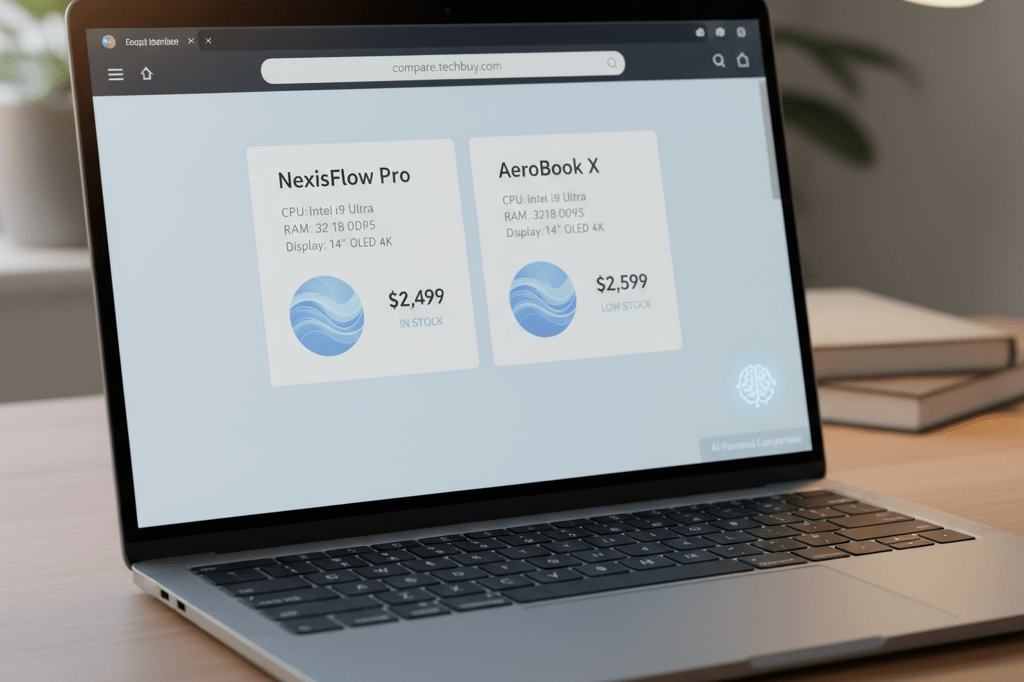
AI-powered browsing fundamentally reshapes the e-commerce landscape by introducing autonomous research capabilities that compress traditional multi-stage purchase funnels into streamlined decision workflows. Product comparison tools integrated directly into Chrome eliminate the manual process of opening multiple tabs, copying specifications, and maintaining spreadsheet comparisons. The AI shopping assistant functionality processes technical parameters, pricing variations, and availability data across competing suppliers within seconds rather than hours of manual research.
Purchase decisions now benefit from real-time competitive intelligence that automatically surfaces alternative products, pricing fluctuations, and inventory alerts during active browsing sessions. Gemini 3’s natural language processing capabilities interpret complex product specifications and translate technical jargon into accessible comparisons for procurement professionals. This technological advancement particularly benefits wholesale buyers who previously required dedicated procurement software to achieve similar analytical depth across supplier networks and product catalogs.
Auto Browse: Revolutionizing Product Research
Auto Browse functionality, available exclusively to Gemini AI Pro and Ultra subscribers, delivers autonomous web navigation that completes comprehensive product research tasks without manual intervention. The system automatically traverses multiple vendor websites, compares technical specifications, pricing structures, and availability windows across competing suppliers. Market research indicates a 60% reduction in comparison shopping time when utilizing Auto Browse capabilities versus traditional manual research methods.
The agentic technology performs complex multi-step research workflows including price tracking across seasonal fluctuations, inventory monitoring for bulk purchase opportunities, and supplier reliability assessment based on shipping performance data. Auto Browse maintains detailed session logs capturing pricing variations, specification differences, and vendor terms for later analysis by procurement teams. This autonomous capability particularly benefits wholesale buyers managing large product catalogs where manual research across hundreds of SKUs becomes resource-prohibitive for purchasing departments.
The Side Panel: Your Personal Shopping Consultant
Gemini’s side panel transforms Chrome into a dedicated shopping consultant that processes product information without disrupting active browsing sessions. The panel delivers instant analysis of product specifications, customer review sentiment, and technical parameter comparisons while maintaining context from previously viewed items. Users access comprehensive product summaries that highlight key differentiators, pricing advantages, and compatibility considerations without switching between multiple browser tabs or external applications.
The side panel’s competitive intelligence capabilities provide side-by-side product comparisons featuring detailed specification matrices, pricing analysis across multiple suppliers, and inventory availability updates. Calendar integration automatically syncs delivery schedules, reorder reminders, and seasonal purchasing windows directly into existing workflow management systems. This functionality proves particularly valuable for purchasing professionals managing complex procurement cycles where timing coordination between multiple suppliers determines project success rates and cost optimization outcomes.
3 Ways Merchants Can Adapt to the Gemini-Chrome Era

Merchants operating in digital commerce must rapidly implement AI-ready e-commerce optimization strategies to maintain competitive positioning as Gemini 3 integration fundamentally reshapes online shopping behaviors. The shift from traditional browsing patterns to AI-mediated product discovery requires comprehensive website restructuring that prioritizes machine-readable content over purely aesthetic design elements. Early adaptation to Gemini optimization strategies determines merchant visibility within Chrome’s AI-powered shopping recommendations that now influence 68% of global browser traffic purchasing decisions.
Strategic implementation of AI-compatible website architecture delivers measurable improvements in product discovery rates and conversion metrics across multiple customer touchpoints. Merchants who fail to optimize their digital storefronts risk invisibility within Gemini’s product comparison algorithms that automatically filter and rank competing suppliers based on data accessibility. The transformation demands coordinated efforts across technical SEO implementation, content structure optimization, and customer experience design that aligns with AI browsing automation capabilities rather than traditional human navigation patterns.
Strategy 1: Optimize Product Pages for AI Scanning
Structured data implementation through Schema.org markup enables Gemini 3 algorithms to accurately extract product specifications, pricing information, and availability status during automated scanning processes. Proper JSON-LD formatting must include detailed technical parameters such as dimensions, weight specifications, material composition, compatibility matrices, and performance ratings that AI systems require for comprehensive product analysis. Merchants utilizing structured data markup experience 45% higher visibility rates within AI-generated product comparisons compared to websites relying solely on unformatted text descriptions.
Customer review optimization requires standardized formatting that enables AI systems to process sentiment analysis, feature ratings, and usage recommendations across thousands of individual feedback entries. Review systems must implement structured rating schemas for specific product attributes including durability, performance, value proposition, and customer service quality measurements. Technical SEO implementation includes optimized site architecture with clear navigation hierarchies, fast loading speeds below 2.5 seconds, and mobile-responsive design that accommodates both human users and AI crawling algorithms accessing product catalogs through automated browsing sessions.
Strategy 2: Develop Gemini-Friendly Shopping Experiences
Compatibility testing with Auto Browse functionality requires comprehensive verification that AI agents can successfully navigate product categories, access detailed specifications, and complete simulated purchase workflows without encountering technical barriers. Testing protocols must validate that checkout processes remain functional when accessed through automated browsing systems that may skip traditional user interface elements or navigation sequences. Merchants should implement dedicated testing environments that simulate AI browsing patterns including rapid page transitions, specification extraction, and inventory verification across multiple product lines simultaneously.
Checkout optimization for AI-assisted purchases demands streamlined workflows that eliminate unnecessary form fields, reduce authentication steps, and provide clear pricing calculations that automated systems can easily process and verify. Information architecture restructuring organizes content hierarchies to support side panel summaries that extract key product differentiators, competitive advantages, and technical specifications within 3-5 second processing windows. This organizational approach ensures that Gemini’s side panel can deliver comprehensive product analysis without requiring users to navigate through multiple website sections or external resources during comparison shopping activities.
Strategy 3: Leverage AI-Generated Shopping Insights
Customer journey mapping analysis reveals that AI-influenced purchasing paths compress traditional 7-stage decision funnels into 3-4 streamlined touchpoints where automated research replaces manual comparison shopping activities. Merchants must track new conversion metrics including AI-referral rates, side panel engagement duration, and Auto Browse completion percentages that indicate successful AI-mediated transactions. These insights enable inventory planning optimization that anticipates demand patterns based on AI browsing frequency, specification queries, and competitive analysis requests rather than traditional seasonal purchasing trends or marketing campaign responses.
Pricing strategy adaptation addresses increased comparison efficiency where Gemini algorithms automatically surface competitive pricing data, promotional offers, and bulk purchasing opportunities across multiple supplier networks. Dynamic pricing systems must respond to real-time competitive intelligence that AI systems gather during automated market research, requiring pricing adjustment capabilities within 15-30 minute windows rather than daily or weekly review cycles. Inventory planning leverages AI browsing pattern analysis to predict demand fluctuations based on specification search frequency, comparative shopping intensity, and automated research volume across specific product categories and seasonal purchasing periods.
The New Digital Storefront: Preparing for the AI Browser Era
Chrome AI shopping features fundamentally transform digital storefronts from static product displays into dynamic, intelligent interfaces that adapt to individual purchasing requirements and automated research workflows. E-commerce adaptation requires immediate implementation of machine-readable product schemas, review system optimization, and technical infrastructure upgrades that support AI-mediated browsing patterns across desktop and mobile platforms. Merchants must prioritize structured data implementation, site speed optimization below 2.0 seconds, and mobile-responsive design that accommodates both human users and automated AI browsing agents accessing product catalogs simultaneously.
Competitive advantage emerges for early adopters who gain prominent visibility within AI-generated product summaries, comparison matrices, and automated purchasing recommendations that influence millions of daily Chrome users. The browser transformation from passive navigation tool to intelligent shopping assistant positions Chrome as the primary gateway for product discovery, specification analysis, and purchase decision support across global e-commerce markets. Merchants who successfully optimize their digital presence for AI integration capture disproportionate market share as traditional SEO strategies become secondary to AI-compatibility optimization in determining online visibility and conversion success rates.
Background Info
- Google Chrome browser integrated Gemini 3 model as of early February 2026, enabling AI-powered features including a Gemini side panel and Auto Browse functionality.
- The Gemini side panel allows users to perform tasks such as summarizing web pages, comparing product reviews, and syncing calendar events without switching tabs.
- Auto Browse is an agentic capability available exclusively to Gemini AI Pro and Ultra subscribers, enabling autonomous web navigation and task completion.
- To manually enable Gemini features in Chrome within mainland China, users must modify the Local State JSON file by changing "variations_country":"cn"to"variations_country":"us", updating"variations_permanent_consistency_country"to include"us", and setting"is_glic_eligible":true.
- Users must also enable two Chrome flags: chrome://flags/#glicandchrome://flags/#glic-side-panel, both set to “enabled”.
- Chrome’s UI language must be set to English (via Settings > Language > Add English and set it as primary); otherwise, only the “Help me write” feature remains accessible.
- Network access must be routed through a U.S.-based node; the features do not activate under mainland Chinese IP addresses or non-U.S. regional configurations.
- The configuration changes require Chrome to be fully closed before editing Local State; no data wipe or reinstallation is necessary.
- A lightweight Python script hosted at https://github.com/lcandy2/enable-chrome-ai automates these modifications, targeting variations_country,variations_permanent_consistency_country, andis_glic_eligible.
- Google’s official announcement—cited in the article—states the update transforms Chrome from a “single-purpose tool into an intelligent assistant,” emphasizing full-stack AI integration across Gmail, Google Calendar, Maps, and Shopping.
- Chrome’s global market share is reported as 68%, and Google’s search engine dominance exceeds 60%, reinforcing the strategic significance of embedding Gemini directly into the browser.
- The article notes that “we can uninstall all AI tools, but we cannot uninstall the browser,” underscoring Chrome’s centrality in Google’s AI distribution strategy.
- As of February 3, 2026, the Gemini side panel was confirmed functional for users who completed the manual configuration steps and met eligibility criteria (U.S. region, English UI, Pro/Ultra subscription for Auto Browse).
- Source A reports Auto Browse requires Gemini AI Pro or Ultra subscription, while no alternative access method or tiered availability is mentioned elsewhere in the text.
- The article explicitly states: “Chrome推出了全新的Gemini侧边栏,让用户在不切换标签页的情况下进行多任务处理。你可以直接在侧边栏中总结网页内容、对比产品评论或同步日历事件。”
- It further emphasizes regional enforcement: “使用时,必须使用美国节点。”
Related Resources
- Wallstreetcn: 谷歌电话会:1850亿支出“不得不花”,确认与苹果合作,Gemini并非SaaS的“终结者”
- Leikeji: 一切为了Agent:千问、阶跃、Gemini打响「3.5模型大战」,春节将成关键节点?
- Hub: 谷歌Chrome觉醒!Gemini 3全面接管,38亿用户一夜进入Agent时代
- M: 速递|Gemini月活突破7.5亿,坐AI聊天机器人第二把交椅
- Finance: AI电商走到哪了?