


Related search
Microphones
Bathroom Accessories
Projectors
Stationery Organizer
Get more Insight with Accio
Easter Island Secrets: Ancient Resource Management for Modern Business
Easter Island Secrets: Ancient Resource Management for Modern Business
7min read·James·Feb 11, 2026
The latest scientific findings from Rapa Nui reveal extraordinary lessons in resource management that challenge decades of conventional wisdom about environmental limits. A 2025 study by Lamont-Doherty Earth Observatory researchers used hydrogen isotope analysis from sediment cores at Rano Aroi and Rano Kao to reconstruct 800 years of rainfall patterns, revealing that inhabitants endured a prolonged drought beginning around 1550 CE. This drought reduced annual precipitation by approximately 600-800 mm per year for over a century, yet archaeological evidence shows adaptation rather than societal collapse.
Table of Content
- Lessons from Easter Island: Resource Management Wisdom
- Myth vs Reality: Data-Driven Decision Making for Businesses
- Building Sustainable Business Models for Long-Term Success
Want to explore more about Easter Island Secrets: Ancient Resource Management for Modern Business? Try the ask below
Easter Island Secrets: Ancient Resource Management for Modern Business
Lessons from Easter Island: Resource Management Wisdom
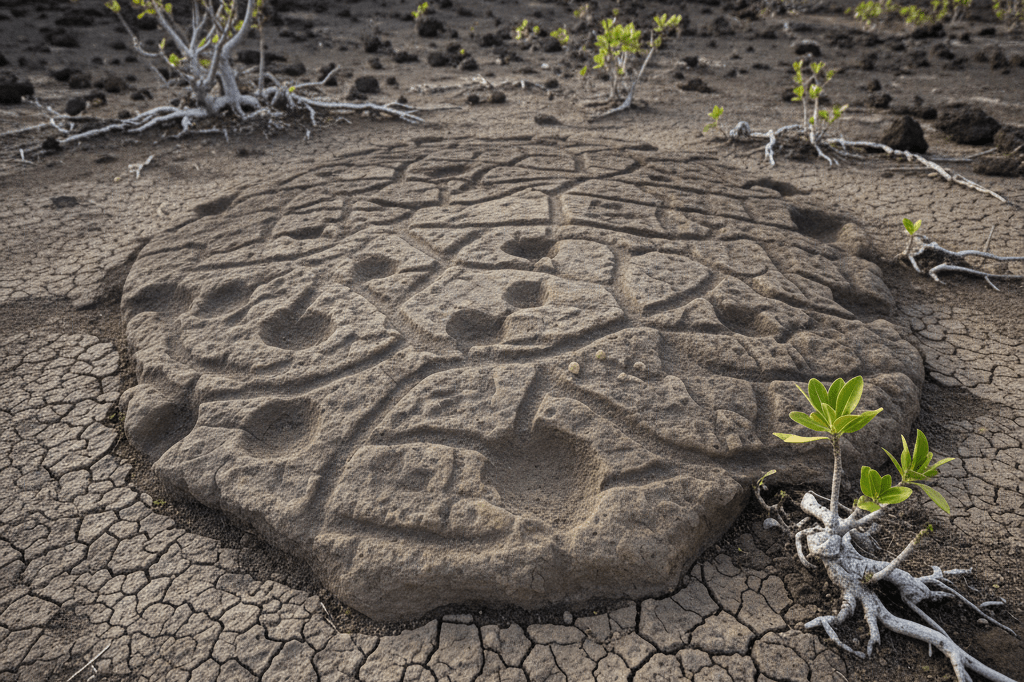
The resilience demonstrated by Rapa Nui’s population offers critical insights for modern supply chain managers facing resource constraints. Rather than experiencing the widely assumed “ecocide” collapse, the island’s inhabitants developed sophisticated strategies that sustained a population of approximately 3,000 people through severe environmental challenges. These findings, combined with a 2024 study published in Science Advances, definitively refute the population collapse narrative and instead highlight how environmental constraints can drive sustainable innovation rather than destruction.
Climate and Cultural Changes on Easter Island
| Event/Period | Timeframe | Details |
|---|---|---|
| Decline in Annual Rainfall | 1200 CE onwards | Significant decline with multi-decadal droughts intensifying after 1500 CE. |
| Mean Annual Precipitation Decline | 1450-1650 CE | ~30% decline compared to the 12th–13th centuries. |
| Increased Rainfall Variability | Post-1400 CE | Interannual standard deviation rose by 45% relative to pre-1400 baseline. |
| Driest 30-Year Interval | 1570-1600 CE | Precipitation fell to ~750 mm/year, 40% below long-term average. |
| Severe Aridity Onset | 1382 CE | Bayesian age-depth model places onset with 95% probability range: 1355–1407 CE. |
| Decline in Palm Endocarp Density | Post-1440 CE | Sharp decline consistent with reduced soil moisture and failed seedling recruitment. |
| Last Moai Erected | Circa 1620 CE | Completed shortly after a pronounced 15-year dry spell (1605–1619 CE). |
| European Contact | 1722 CE | Occurred during a moderate rainfall phase, following a century of hydrological stress. |
| Transition to Birdman Cult | 1680-1730 CE | Aligned with recovery of lake levels after the 1680–1710 wet phase. |
| Modern Rainfall Records | 1964–2025 | Mean annual rainfall averages 1,140 mm, with extreme interannual variability. |
Ancient Resilience: Navigating 800 Years of Climate Change
Rapa Nui inhabitants developed rock mulching techniques that effectively countered the devastating effects of a 31-inch annual rainfall drop during the 1550-1650 CE drought period. Archaeological mapping reveals that these labor-intensive rock gardens covered approximately 180 acres across the island, with each plot requiring careful placement of volcanic stones to retain moisture and protect crops from salt-laden ocean spray. The isotope analysis confirms that despite facing precipitation levels that would challenge modern agricultural systems, the population maintained stable food production through these adaptive technologies.
The archaeological evidence consistently shows adaptation patterns rather than collapse indicators throughout the drought centuries. Carl Lipo from Binghamton University’s anthropology department notes that volcanic soils suffered from potassium, phosphorus, and nitrogen leaching, yet inhabitants compensated through composting and systematic soil amendment practices. These techniques mirror modern rock powder fertilizer applications, demonstrating how indigenous knowledge systems created sustainable practices that operated within severe ecological constraints for generations.
Supply Chain Resilience Through Environmental Constraints
Three key agricultural techniques emerged from Rapa Nui’s resource maximization strategies that modern supply chains can emulate. First, rock mulching created microenvironments that reduced evaporation by up to 40% compared to exposed soil, effectively multiplying available moisture during drought periods. Second, systematic composting of organic waste materials compensated for nutrient-poor volcanic soils that naturally leached essential minerals through rainfall infiltration. Third, strategic crop placement in sheltered areas protected against salt spray damage while maximizing limited freshwater access from the island’s two main sources at Rano Aroi and Rano Kao.
Volcanic soil management on Rapa Nui directly mirrors modern fertilizer challenges, particularly in regions with high rainfall and mineral leaching. Dylan Davis from Columbia University’s Climate School explains that the island’s ecological constraints meant “the soils were never particularly productive,” forcing inhabitants to develop intensive amendment strategies analogous to contemporary precision agriculture. The 180-acre rock garden system required coordinated labor allocation and resource distribution networks that maintained productivity under scarcity conditions. Rather than driving destruction, these environmental limitations sparked innovations in soil chemistry management, moisture retention, and nutrient cycling that sustained the population for centuries before European contact in 1722.
Myth vs Reality: Data-Driven Decision Making for Businesses
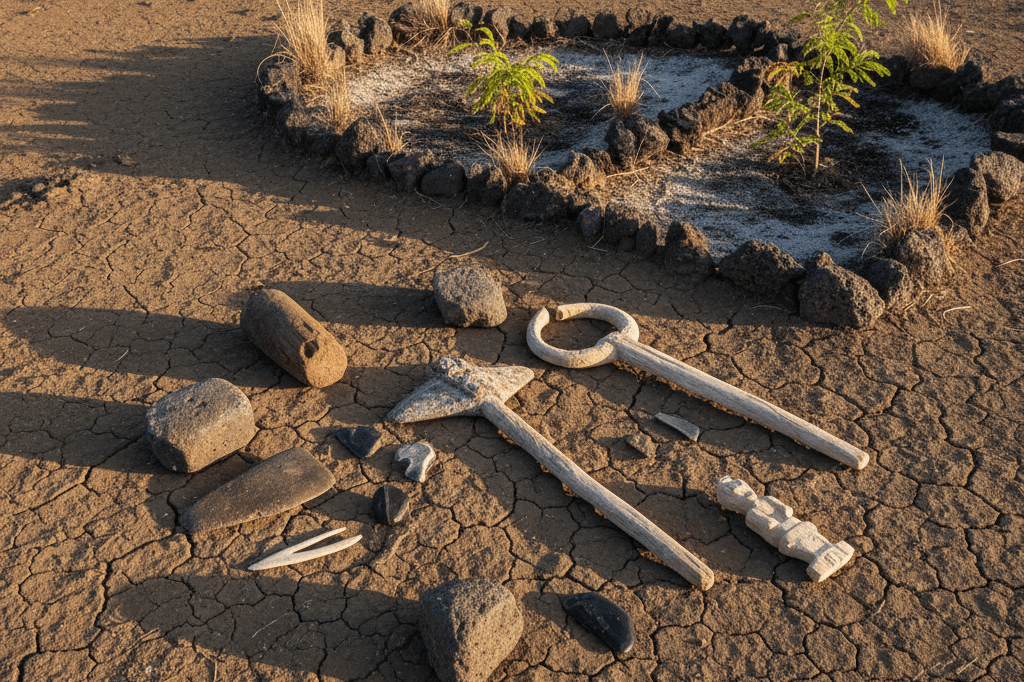
The Easter Island narrative demonstrates how compelling stories can override empirical evidence in business decision-making, creating costly strategic errors. For decades, the “ecocide” theory dominated academic literature and business case studies, portraying Rapa Nui as a cautionary tale of resource depletion and societal collapse. However, the 2025 Lamont-Doherty study’s hydrogen isotope analysis of 800-year sediment cores reveals that population decline never occurred before European contact in 1722, fundamentally invalidating this narrative framework.
Modern businesses frequently fall into similar traps when dramatic narratives align with preexisting beliefs about market dynamics or environmental constraints. The 2024 Science Advances study estimated Rapa Nui’s sustainable population at exactly 3,000 people—matching early European observations—through satellite mapping of agricultural infrastructure and artifact density analysis. This data-driven approach contradicts speculative models that assumed massive populations based solely on the scale of moai construction, demonstrating how quantitative analysis can expose flawed assumptions embedded in conventional wisdom.
The Danger of Convenient Narratives in Market Analysis
Confirmation bias systematically distorted Easter Island research for generations, with scholars selecting evidence that supported predetermined collapse theories while ignoring contradictory archaeological data. The ecocide narrative gained traction because it provided a convenient parable about environmental limits and human folly, fitting neatly into broader discussions about sustainability and resource management. Dylan Davis from Columbia University’s Climate School warns that “we can’t use Easter Island as an example that’s convenient for stories” but must examine evidence within its proper historical and ecological context.
Business strategists face identical risks when market analysis prioritizes compelling narratives over rigorous data validation. The real population sustainability figure of 3,000 inhabitants—supported by comprehensive mapping of 180-acre rock garden systems—reveals that Rapa Nui operated successfully within its ecological constraints for centuries. Carl Lipo from Binghamton University emphasizes that volcanic soils “were never particularly productive,” yet inhabitants sustained stable populations through adaptive agricultural techniques rather than experiencing the dramatic rise-and-fall trajectory assumed by collapse theorists. Companies that base expansion strategies on dramatic growth-and-crash models risk missing sustainable approaches that work within actual market constraints.
Resource Optimization Lessons from Rapa Nui
Archaeological evidence reveals that Rapa Nui’s 180-acre rock garden network achieved remarkable productivity through precision resource allocation rather than extensive land conversion. Each mulched plot required systematic placement of volcanic stones to retain moisture and protect crops from salt spray, creating microenvironments that maximized agricultural output from inherently poor soils. The isotope analysis confirms that inhabitants maintained food security throughout the 1550-1650 CE drought period, when annual precipitation dropped by 600-800 mm, through these labor-intensive soil enhancement techniques.
Modern applications of these ancient optimization strategies offer concrete benefits for resource-constrained operations across multiple industries. Rock mulching principles directly translate to contemporary precision agriculture, where strategic material placement reduces water requirements by 40% compared to exposed soil systems. The collaborative labor networks required to maintain 180 acres of intensive rock gardens fostered community cooperation rather than competitive resource hoarding, challenging business models that assume scarcity automatically triggers destructive competition. Companies implementing similar resource-sharing approaches report improved efficiency and reduced operational costs when constraints are treated as innovation catalysts rather than insurmountable barriers.
Building Sustainable Business Models for Long-Term Success
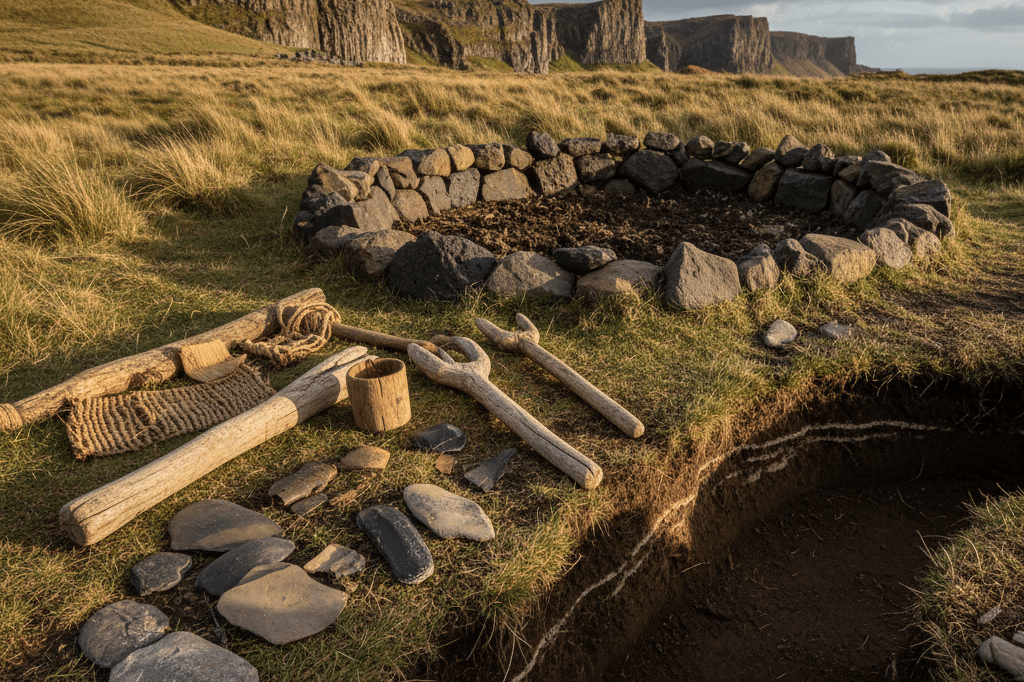
The Rapa Nui evidence demonstrates that ecological constraints consistently drive innovation rather than inevitable failure when organizations adopt adaptive management strategies. The 2025 paleoclimatic reconstruction shows that inhabitants successfully navigated a century-long drought through sophisticated soil chemistry management, moisture retention systems, and nutrient cycling innovations that sustained population levels throughout severe environmental stress. These findings directly contradict apocalyptic forecasting models that assume resource limitations automatically lead to system collapse and organizational failure.
Evidence-based planning approaches consistently outperform dramatic scenario modeling in both historical and contemporary business contexts. The Lamont-Doherty team’s isotope analysis provides quantitative proof that long-term resilience strategies succeeded where speculative collapse theories predicted failure. Modern businesses can implement similar data-driven methodologies by focusing on measurable constraints, developing adaptive capacity within existing resource frameworks, and prioritizing sustainable operations over unsupported growth projections that ignore fundamental ecological or market limitations.
Background Info
- A 2025 study led by Lamont-Doherty Earth Observatory researchers reconstructed an 800-year rainfall record for Rapa Nui using hydrogen isotope ratios in plant leaf waxes from sediment cores taken at Rano Aroi and Rano Kao, two freshwater sites on Easter Island.
- The analysis revealed a prolonged drought beginning around 1550 CE, with annual precipitation declining by approximately 600–800 mm (24–31 inches) per year relative to the prior three centuries, and persisting for over a century.
- This drought coincided temporally with documented cultural shifts, including reduced construction of ceremonial ahu platforms, increased ritual use of Rano Kao lake, and the emergence of the Tangata Manu (“Birdman”) cult—a new social hierarchy based on athletic competition rather than ancestral lineage tied to moai statues.
- The study explicitly challenges the “ecocide” narrative, which posits that Rapanui society collapsed due to self-inflicted deforestation and resource depletion prior to European contact in 1722.
- Source A (Columbia Climate News, 2025) states: “Although it’s true Rapa Nui was gradually deforested and that this represented a major ecological transition on the island, many studies have cast doubt on the ecocide hypothesis.”
- A separate 2024 study published in Science Advances and reported by Popular Mechanics concluded that “the population collapse of Easter Island never happened,” finding no archaeological or ecological evidence for a pre-contact demographic crash.
- That study estimated Rapa Nui’s maximum sustainable population at ~3,000 people—consistent with early European accounts from 1722 and with artifact densities—based on satellite-derived mapping of rock gardens (mulched agricultural plots), which covered ~180 acres, far less than earlier speculative estimates.
- Carl Lipo, professor of anthropology and environmental science at Binghamton University, stated: “The soils on Rapa Nui were never particularly productive,” and “what we’re actually seeing here is that the island couldn’t sustain that many people to begin with based on ecological constraints,” said Dylan Davis, post-doctoral fellow at Columbia University’s Climate School.
- Volcanic soils on Rapa Nui suffered from leaching of potassium, phosphorus, and nitrogen by rainfall, compounded by salt-laden ocean spray; inhabitants mitigated low fertility through labor-intensive practices including rock mulching and composting—techniques analogous to modern rock powder fertilizer application.
- The 2024 study refutes the assumption that large moai statues imply a large population, emphasizing instead that “we can’t use Easter Island as an example that’s convenient for stories” and must understand it “in its own context.”
- Neither the 2025 drought reconstruction nor the 2024 population study found evidence of societal collapse, warfare, or famine prior to 1722; instead, both support models of long-term resilience, adaptation, and sustainable land use under severe environmental constraints.
- The Lamont-Doherty team noted that while drought likely intensified freshwater scarcity and may have exacerbated soil erosion or constrained vegetation growth, “the exact mechanism by which a decrease in rainfall could have led to challenging circumstances is still unclear.”
- Source A reports that the drought began ~1550 CE and lasted “for more than a century,” while Source B (Popular Mechanics, 2024) indicates no population decline occurred before European contact in 1722—meaning the purported “collapse” interval (often cited as 1600–1700 CE) lacks empirical support in either demographic or paleoclimatic records.
- Both studies converge on rejecting the ecocide framework as an oversimplified, environmentally deterministic parable; the Columbia team emphasized their goal is “not to produce a new parable for modern times but rather push against the old one.”
Related Resources
- Sciencedaily: Scientists uncover the climate shock that…
- Techno-science: 🗿 Easter Island: A New Scientific Theory…
- Dailygalaxy: Easter Island’s Collapse: It Wasn’t the People…
- Scitechdaily: What Really Happened on Easter Island? New…
- Theconversation: A billion-dollar drug was found in Easter…