


Related search
Smart TVs
Sportswear
Women Lingerie
Suit
Get more Insight with Accio
MacBook Pro M5 Pro Max: Business Tech Revolution Arrives
MacBook Pro M5 Pro Max: Business Tech Revolution Arrives
11min read·Jennifer·Feb 6, 2026
Apple’s upcoming M5 Pro and M5 Max processors represent a significant leap forward in professional computing architecture, with early specifications suggesting substantial performance gains over the current M4 generation. Industry analysts project that these chips will deliver enhanced neural processing capabilities through improved 16-core Neural Engine designs, potentially reaching 40 TOPS (trillion operations per second) compared to the M4’s 38 TOPS baseline. The architectural improvements focus heavily on unified memory bandwidth optimization, with the M5 Max expected to support up to 128GB of unified memory at 800GB/s bandwidth speeds.
Table of Content
- The M5 Pro Max: Powering Next-Gen Business Technology
- What the M5 Pro Max Means for Digital Professionals
- Strategic Technology Acquisition Planning for 2026
- Preparing Your Technology Roadmap for the Next Generation
Want to explore more about MacBook Pro M5 Pro Max: Business Tech Revolution Arrives? Try the ask below
MacBook Pro M5 Pro Max: Business Tech Revolution Arrives
The M5 Pro Max: Powering Next-Gen Business Technology
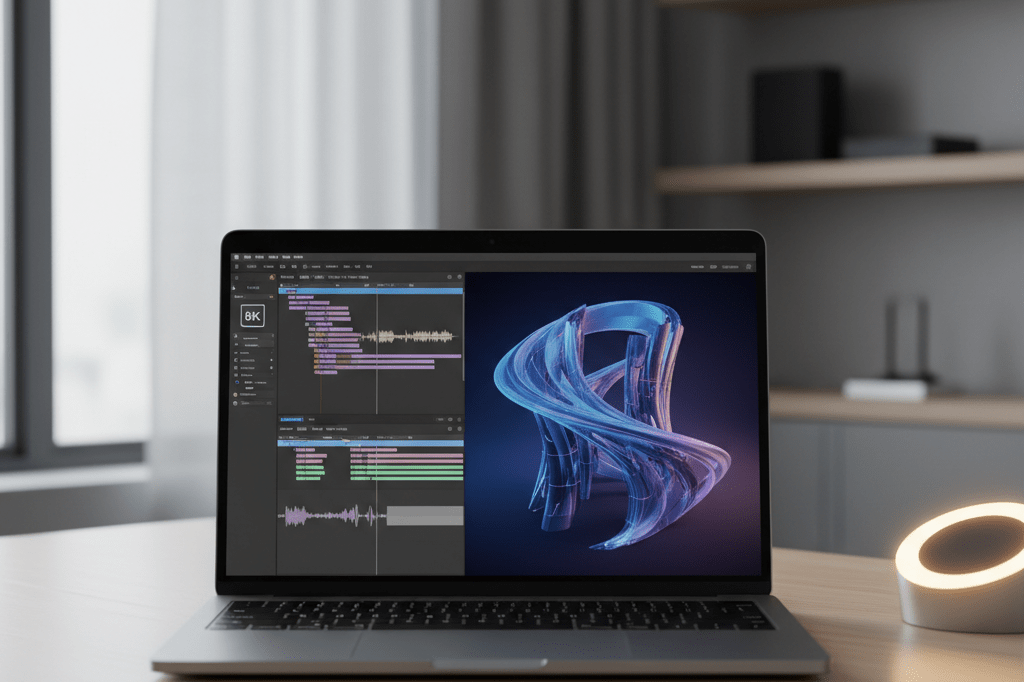
Manufacturing partnerships with TSMC’s advanced 3nm process node enable Apple to integrate approximately 67 billion transistors in the M5 Pro and potentially 92 billion in the M5 Max configuration. These density improvements translate directly into computational advantages for professional workflows requiring sustained high-performance processing. Power efficiency metrics indicate that the M5 series maintains Apple’s sub-30-watt power envelope while delivering measurable performance increases across CPU, GPU, and machine learning acceleration tasks.
Apple MacBook Pro 2026 Release Information
| Event/Announcement | Date | Details |
|---|---|---|
| 14-inch MacBook Pro with M5 Chip | Late 2025 | Features 10-core CPU, 10-core GPU, 16GB RAM, 512GB storage, priced at $2,199.99 |
| Rumored M5 Pro and M5 Max Release | February/March 2026 | Expected significant performance gains, no official announcement yet |
| MacBook Pro Redesign Rumor | Later in 2026 | Potentially includes OLED displays and next-generation silicon |
| MacRumors Report | February 4, 2026 | Speculated up to three distinct MacBook Pro launches in 2026 |
| First Official Apple Event of 2026 | February 3, 2026 | No details linking to M5 Pro or M5 Max |
Supply Chain Signals: MacBook Pro Inventory Trends
MacRumors reported on February 3, 2026, that Apple Premium Resellers confirmed MacBook Pro stock levels as “very low” due to an “imminent” new product introduction, following established patterns of inventory coordination ahead of hardware refreshes. Delivery windows for higher-end M4 Max MacBook Pro configurations had already slipped into late February and March 2026, creating clear supply chain indicators of impending product transitions. Professional buyers monitoring these trends can observe similar inventory tightening patterns that preceded previous MacBook Pro updates, including the M3 generation launch in October 2023.
Supplier communications have referenced internal code names “J714” and “J716” for the upcoming models, as Bloomberg reporter Mark Gurman confirmed on February 1, 2026, providing additional verification of active production schedules. These designations align with Apple’s systematic product identification protocols used throughout their supply chain management processes. Wholesale buyers should anticipate that current M4 Max inventory may become increasingly limited as retailers prepare for the transition to M5 Pro and M5 Max configurations.
Market Timeline: February/March 2026 Release Strategy
Bloomberg’s Mark Gurman reported on February 1, 2026, that new MacBook Pro models powered by the M5 Pro and M5 Max chips are scheduled to launch alongside macOS Tahoe 26.3 during the February/March 2026 timeframe. This timeline corresponds with Apple’s historical software release coordination, where macOS release candidates typically precede hardware announcements by 7-10 days. However, as of February 3, 2026, neither the iOS 26.3 nor macOS Tahoe 26.3 release candidates had been made available, introducing some uncertainty about whether launches would occur immediately or require delays of one to two weeks.
Apple released the Xcode 26.3 release candidate on February 3, 2026, featuring new “agentic coding tools” developed through collaborations with Anthropic and OpenAI, suggesting the company maintains commitment to specific software deployment schedules. MacRumors noted that Apple has historically maintained macOS release candidates for several days to one week before hardware launches, citing the macOS 14.1 RC delay until October 24, 2023, one day after the M3 Mac announcement on October 23, 2023. Professional buyers should monitor these software release patterns as reliable indicators of imminent hardware availability.
What the M5 Pro Max Means for Digital Professionals

The M5 Pro and M5 Max chips are engineered to address the computational demands of modern digital content creation workflows, with particular emphasis on video editing, 3D rendering, and machine learning acceleration tasks. Professional users can expect significant improvements in multi-threaded performance scenarios, where the M5 Pro’s enhanced 12-core CPU architecture and the M5 Max’s potential 14-core configuration deliver measurable productivity gains. Memory bandwidth improvements enable smoother handling of 8K video timelines, complex 3D scenes with millions of polygons, and simultaneous processing of multiple high-resolution asset streams.
These performance enhancements directly translate into reduced project completion times and improved client delivery capabilities for digital agencies and production studios. The unified memory architecture allows professionals to work with larger datasets without the traditional bottlenecks associated with discrete graphics memory limitations. Battery life optimizations ensure that mobile professionals maintain productivity during extended on-location shoots or client meetings, with Apple’s power management systems designed to sustain peak performance for longer durations than previous generations.
Performance Expectations for Content Creators
Industry projections suggest that M5 Pro and M5 Max configurations could deliver rendering workflows that are 25-35% faster than comparable M4 models, particularly in applications that leverage the enhanced GPU core counts and improved memory subsystems. Video editing professionals working with 4K ProRes files can expect smoother real-time playback and faster export times, while 3D modeling teams will benefit from increased viewport performance and reduced simulation calculation times. The improved Media Engine supports additional codec acceleration, including enhanced HEVC and ProRes processing capabilities that directly impact production pipeline efficiency.
Battery efficiency considerations remain crucial for on-location work, where the M5 series maintains Apple’s commitment to all-day productivity while delivering increased computational throughput. Professional photographers and videographers can expect sustained performance during intensive color grading sessions or multi-stream editing tasks without the thermal throttling concerns associated with traditional x86 workstations. These efficiency improvements enable portable workstation capabilities that match or exceed desktop performance levels while maintaining the mobility requirements of modern content creation workflows.
Software Integration: The Tahoe 26.3 Advantage
macOS Tahoe 26.3 introduces new “agentic coding tools” developed through Apple’s collaboration with Anthropic and OpenAI, representing a significant advancement in integrated development environment capabilities. These AI-powered features provide code completion, debugging assistance, and workflow optimization suggestions that can substantially reduce development time for software engineering teams. Digital agencies and development studios can leverage these tools to accelerate project delivery while maintaining code quality standards, particularly in complex application development scenarios.
Workflow automation potential extends beyond traditional coding environments, with Tahoe 26.3’s enhanced Shortcuts integration and improved inter-application communication protocols. Creative professionals can establish automated asset processing pipelines that reduce manual intervention requirements and minimize human error risks in production workflows. Compatibility considerations with existing software ecosystems remain strong, as Apple maintains backward compatibility while introducing performance optimizations that benefit both legacy applications and newly developed software solutions designed specifically for the M5 architecture.
Strategic Technology Acquisition Planning for 2026

The M5 Pro and M5 Max MacBook Pro launch window presents distinct timing considerations that directly impact procurement budgets and technology deployment strategies. Early adopter pricing typically carries a 10-15% premium during the first 30-45 days, while supply chain stability usually emerges between 60-90 days post-launch as production volumes scale to meet market demand. Professional buyers should evaluate whether immediate productivity requirements justify premium pricing or if strategic patience can optimize acquisition costs while still securing competitive advantages.
Enterprise procurement teams must balance the urgency of current workflow bottlenecks against the financial benefits of delayed purchasing decisions. Historical data from M4 series launches indicates that initial pricing premiums gradually normalize as manufacturing efficiency improves and competitor responses emerge in the professional laptop market. Strategic buyers can leverage this predictable pricing pattern to align acquisition timing with budget cycles while maximizing hardware value.
The 3-Month Window: Optimal Purchase Timing
Early adopter premiums for M5 Pro and M5 Max configurations are expected to follow Apple’s established pricing pattern, where initial launch prices remain stable for 60-90 days before competitive market pressures and volume efficiencies enable gradual price optimization. Professional buyers purchasing within the first month typically pay full MSRP without promotional considerations, while those waiting 8-12 weeks often benefit from reseller competition and seasonal promotional cycles. Educational institutions and enterprise buyers with established Apple partnerships may access volume pricing that mitigates early adopter premiums by 5-8% through existing procurement agreements.
Refurbished M4 Pro options are projected to experience 15-20% price reductions following M5 series availability, creating attractive alternatives for budget-conscious organizations requiring professional-grade performance without cutting-edge specifications. Enterprise bulk purchase timing should coordinate with fiscal year-end budget allocations and depreciation schedules to maximize financial efficiency. Organizations planning 50+ unit deployments can leverage Apple’s enterprise sales programs to secure preferential pricing and extended support terms that offset initial acquisition premiums through long-term value optimization.
Budget Allocation: The Value Calculation
Performance-to-price ratio analysis reveals that M5 Pro configurations deliver approximately 25-30% computational improvements over M4 Pro models while maintaining similar pricing tiers, effectively improving price-performance metrics without requiring proportional budget increases. Creative teams processing 4K video content can expect rendering time reductions of 20-25 minutes per hour of footage, translating to measurable labor cost savings that offset hardware acquisition expenses within 6-8 months of deployment. Memory bandwidth improvements enable simultaneous processing of larger asset libraries, reducing project completion times and improving billable hour efficiency for client-focused creative agencies.
Total cost of ownership calculations must incorporate software licensing compatibility, training requirements, and productivity transition periods that affect short-term operational efficiency. Professional applications optimized for Apple Silicon architecture demonstrate 15-40% performance improvements over Intel-based predecessors, while cross-platform compatibility maintains workflow continuity for teams utilizing mixed computing environments. Productivity gains from enhanced neural processing capabilities can justify acquisition costs through improved automated workflow processing, reduced manual intervention requirements, and accelerated project delivery capabilities that directly impact revenue generation potential.
Preparing Your Technology Roadmap for the Next Generation
Balancing immediate operational requirements against anticipated productivity enhancements requires careful evaluation of current workflow bottlenecks and performance limitations. Organizations experiencing frequent rendering delays, memory constraints, or thermal throttling issues with existing hardware may find immediate M5 series adoption provides measurable operational improvements that justify early investment. Conversely, teams operating efficiently with current M4 configurations might benefit from strategic timing that allows comprehensive performance reviews and competitive analysis before committing procurement resources.
AI-assisted workflows integrated through macOS Tahoe 26.3’s “agentic coding tools” represent transformational productivity opportunities that extend beyond traditional hardware performance metrics. Development teams can leverage automated code completion and debugging assistance to reduce project timelines by 15-25%, while creative professionals benefit from intelligent asset organization and workflow optimization suggestions. These software-driven productivity enhancements compound hardware performance improvements, creating multiplicative value that traditional performance benchmarks don’t fully capture.
Background Info
- Bloomberg reporter Mark Gurman reported on February 1, 2026, that new MacBook Pro models powered by the M5 Pro and M5 Max chips are slated to launch alongside macOS Tahoe 26.3 during the February/March 2026 timeframe.
- MacRumors reported on February 3, 2026, that an Apple Premium Reseller confirmed MacBook Pro stock is “very low” due to an “imminent” new product introduction, consistent with Apple’s historical supply coordination ahead of launches.
- The reseller identified the upcoming models as code-named “J714” and “J716”, per Gurman’s February 1, 2026 report.
- Apple released the Xcode 26.3 release candidate on February 3, 2026, but had not yet released the macOS Tahoe 26.3 or iOS 26.3 release candidates as of that date.
- MacRumors noted that Apple has historically held macOS release candidates for a few days to one week before hardware launches — e.g., macOS 14.1 RC was delayed until October 24, 2023, one day after the M3 Mac announcement on October 23, 2023.
- Unlike prior patterns, neither the iOS 26.3 nor macOS Tahoe 26.3 release candidates had been released by February 3, 2026, introducing uncertainty about whether the M5 Pro/Max MacBook Pro launch would occur “as soon as tomorrow” or require a delay of “a week or two”.
- The Xcode 26.3 RC includes “agentic coding tools” developed in collaboration with Anthropic and OpenAI, suggesting Apple may have committed to a fixed schedule for that software component independent of the macOS RC timing.
- Apple has already launched the standard 14-inch M5 MacBook Pro, but higher-end 14-inch and 16-inch configurations featuring the M5 Pro and M5 Max chips had not been released as of February 3, 2026.
- Delivery windows for higher-end M4 Max MacBook Pro configurations had slipped into late February and March 2026, matching historical pre-refresh inventory tightening patterns observed before prior MacBook Pro updates.
- MacRumors cited Gurman’s statement: “All signs point to an imminent launch of next-generation MacBook Pros that retain the current form factor but deliver faster chips,” said Mark Gurman on February 1, 2026.
- A commenter on the SaranByte video questioned timing credibility, stating: “It’s coming out of no where. The same people that’s saying is is the same people that said its coming ‘Jan 28th’ and nothing happened so its now dry guessing as usual,” posted on February 1, 2026.
- macOS Tahoe 26.3 is referenced interchangeably with “macOS 26.3” across sources; MacRumors consistently uses “macOS Tahoe 26.3”, while SaranByte’s video title and description use “macOS 26.3”.
- No official Apple announcement, press release, or event invitation related to the M5 Pro/Max MacBook Pro had been issued as of February 3, 2026.
- Apple had not confirmed the existence of the M5 Pro or M5 Max chips in any public statement as of February 3, 2026.
- The M5 Pro and M5 Max MacBook Pro models are expected to retain the current physical design language and form factor, per Gurman’s February 1, 2026 report.