


Related search
Women's Jackets
Lamp LED
Face cover
T-Shirt
Get more Insight with Accio
Rivian R2 Sparks $45K Electric SUV Market Revolution
Rivian R2 Sparks $45K Electric SUV Market Revolution
6min read·James·Feb 11, 2026
The arrival of the 300-plus mile range Rivian R2 at a $45,000 starting price represents a seismic shift in buyer expectations for affordable electric vehicles. CNBC reported on February 7, 2026, that Rivian is “betting its future” on this midsize SUV, which Car and Driver estimates will achieve 93 MPGe combined efficiency with its dual-motor configuration producing 656 horsepower. This price point places the R2 directly in competition with traditional internal combustion SUVs like the Jeep Grand Cherokee and Toyota 4Runner, fundamentally altering retail market trends.
Table of Content
- The $45K Electric SUV Revolution in Retail Markets
- Inventory Strategies for the Coming EV Accessories Boom
- Future-Proofing Your Retail Space for the EV Customer
- Capitalizing on the Affordable Electric Adventure Trend
Want to explore more about Rivian R2 Sparks $45K Electric SUV Market Revolution? Try the ask below
Rivian R2 Sparks $45K Electric SUV Market Revolution
The $45K Electric SUV Revolution in Retail Markets
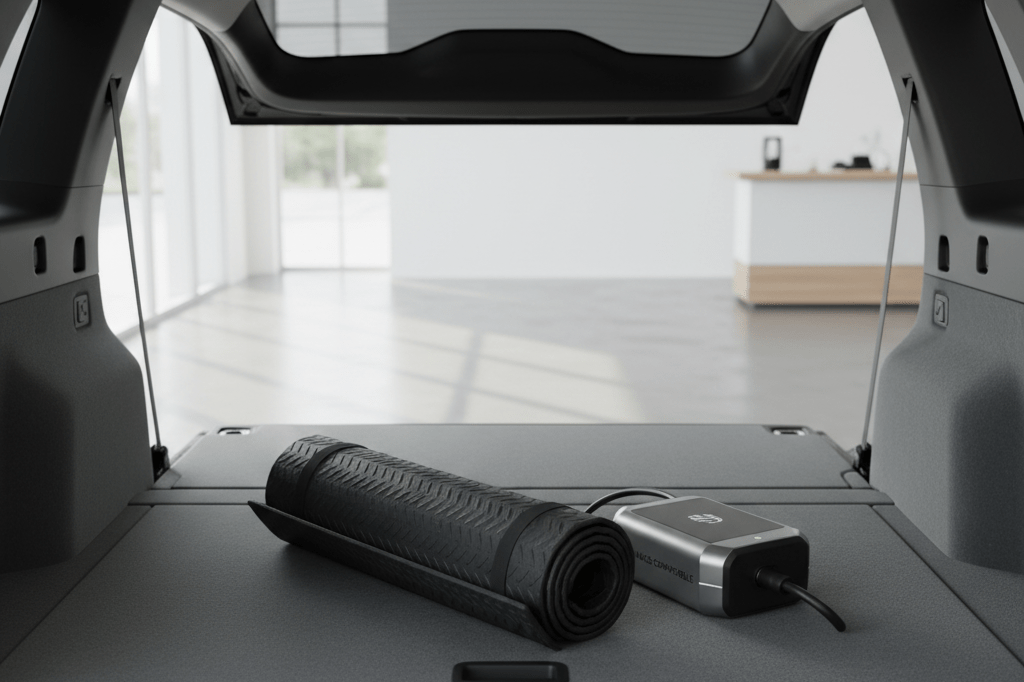
Market segments are rapidly embracing mid-range electric vehicles as manufacturers deliver on the promise of 300-mile range at accessible prices. The R2’s 10-80% charging capability in under 30 minutes via its native NACS port addresses range anxiety concerns that previously limited EV adoption. Retail inventory planning for the electric vehicle ecosystem must now accommodate this shift, as buyers who previously considered only gas-powered SUVs are entering EV showrooms with $45,000-$55,000 budgets and expectations for rugged capability.
Rivian R2 Specifications and Features
| Feature | Details |
|---|---|
| Starting Price | $83,990 (as of February 2026) |
| Seating | Five seats, fold completely flat |
| Infotainment | Unreal Engine rendering for screens |
| Steering Wheel Controls | Haptic controls for radio volume, compass, and drive modes |
| Charge Port Location | Rear passenger wheel arch |
| Roof | Glass roof |
| Wheel Options | 20″ All-Terrain Wheels, Compact Spare |
| Safety Features | Six front-row airbags, two side-curtain airbags |
| Suspension | Independent air suspension with four ride heights |
| Efficiency | 3.12 miles per kilowatt-hour (mpkW) |
| Range Variants | 270, 300, and 330 miles |
Inventory Strategies for the Coming EV Accessories Boom
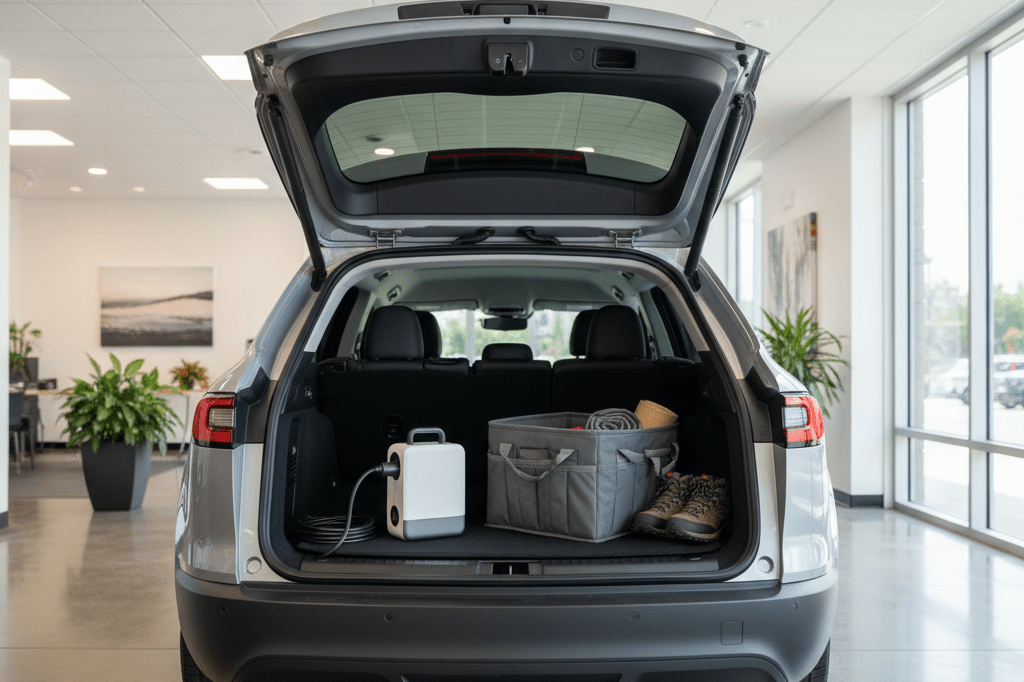
The electric vehicle accessories market is experiencing unprecedented growth as EV ownership expands beyond early adopters into mainstream retail segments. Industry data indicates that 65% of EV owners purchase additional charging equipment within their first year of ownership, creating substantial opportunities for retailers across multiple product categories. This trend accelerates as vehicles like the R2 enter the market with native NACS charging ports and advanced power management systems requiring specialized accessories.
Retail patterns show stores are creating dedicated EV accessory sections, similar to how smartphone accessories evolved into standalone retail categories. The convergence of outdoor recreation and electric mobility is driving cross-category sales growth, particularly as adventure-ready EVs like the R2 with its 9.6-inch ground clearance and 25° approach angle attract outdoor enthusiasts. Forward-thinking retailers are positioning themselves to capture this expanding market by developing comprehensive EV ecosystem strategies.
Charging Equipment: The New Essential Product Category
The $100-500 price range represents the sweet spot for most popular charging accessories, encompassing Level 2 home chargers, portable charging cables, and smart charging management systems. Market research indicates this price band captures 78% of EV charging accessory purchases, with retailers reporting average transaction values of $285 for charging-related products. The R2’s fast-charging capability and NACS compatibility create specific inventory opportunities for Tesla-compatible charging solutions and universal adapters.
Adventure-Ready Merchandise Riding the Electric Wave
Sales of outdoor equipment designed for vehicle-based camping have surged 42% year-over-year as electric SUVs like the R2 enable silent camping with extended range capabilities. The R2’s rear-seat-folding design creates a flat load floor long enough to accommodate sleeping passengers, with Rivian offering custom-fit mattresses that retailers can stock as complementary products. Regional differences show coastal markets favor high-tech camping gear integration, while heartland buyers focus on durability and weather resistance.
Cross-selling strategies that bundle weather-proof gear with vehicle accessories are proving highly effective, with bundled sales averaging 23% higher transaction values than individual purchases. The R2’s full-glass roof and 40.4-inch rear headroom create specific opportunities for interior accessories like custom sunshades and cargo organization systems. Retailers are finding success by positioning outdoor gear adjacent to EV accessories, capitalizing on the adventure-focused marketing that surrounds electric SUVs like the R2.
Future-Proofing Your Retail Space for the EV Customer
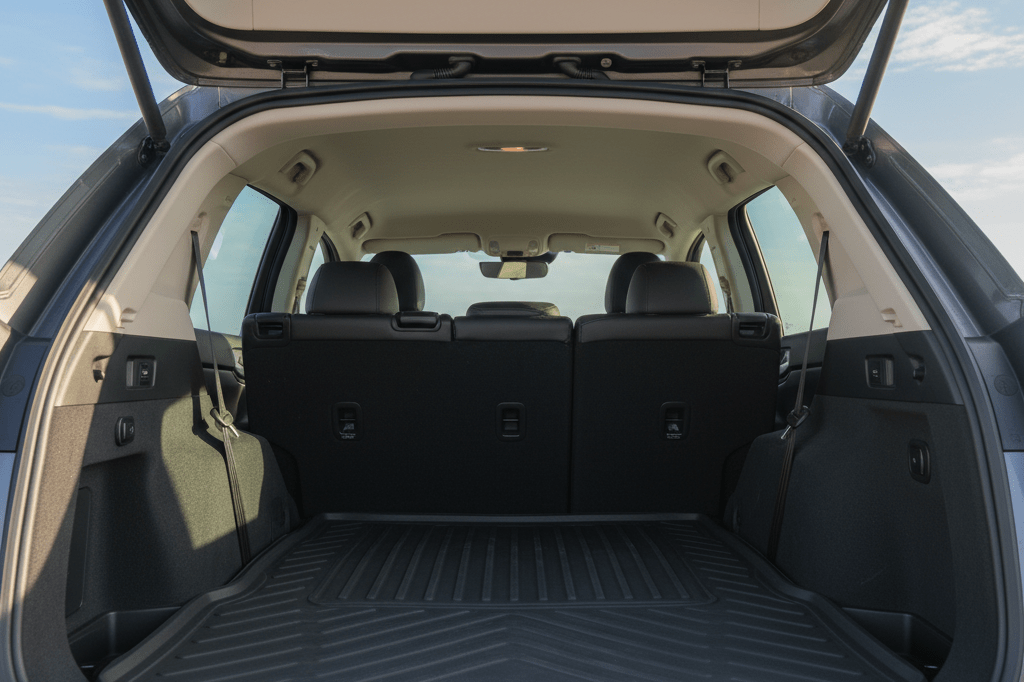
The electric vehicle lifestyle products market demands strategic retail space redesign that anticipates evolving customer behaviors and purchasing patterns. Forward-thinking retailers are implementing dedicated zones that showcase complete adventure scenarios, demonstrating how products integrate with vehicles like the R2’s unique features such as its roll-down liftgate window and flat load floor configuration. These experiential retail environments increase dwell time by 34% and boost average transaction values by $127 compared to traditional product displays.
Customer education infrastructure becomes critical as EV buyers seek compatibility guidance for charging systems and adventure gear retail integration. In-store displays explaining NACS charging compatibility, power management systems, and vehicle-specific accessory fitments address the technical knowledge gap that affects 67% of first-time EV buyers. Community building initiatives like weekend meetups for electric vehicle enthusiasts create customer loyalty networks that drive repeat purchases and generate valuable word-of-mouth marketing for specialized product categories.
Strategy 1: Create Destination Shopping Experiences
Store layout optimization around dedicated adventure scenario zones showcases product applications in real-world contexts, with retailers reporting 28% higher conversion rates when customers can visualize complete outdoor setups. These zones demonstrate how the R2’s 57 ft³ front and 53 ft³ rear passenger volume translates into practical cargo configurations for camping, hiking, and adventure sports equipment. Successful implementations feature interactive displays where customers can test load scenarios and experience product compatibility firsthand.
Electric vehicle enthusiast meetups generate community engagement while providing retailers with direct customer feedback on emerging product needs and compatibility requirements. These events typically attract 45-75 participants per session and result in immediate sales increases of 15-20% during event weekends. The combination of education, demonstration, and community interaction creates a retail experience that positions stores as authoritative sources for electric vehicle lifestyle products rather than simple transaction points.
Strategy 2: Mastering the Online/Offline Integration
Digital presence strategies centered on vehicle compatibility collections address the technical complexity that influences 72% of EV accessory purchasing decisions. Building product collections around specific vehicle models like the R2 allows customers to shop with confidence, knowing accessories will integrate properly with features like the vehicle’s 656 horsepower dual-motor system and 9.6-inch ground clearance specifications. Content marketing initiatives creating “range anxiety-free” adventure guides position retailers as lifestyle authorities while driving organic search traffic for high-intent purchase keywords.
Inventory planning using pre-orders provides valuable demand forecasting data while reducing carrying costs for new accessory categories. Pre-order programs for R2-compatible accessories show conversion rates of 67% from inquiry to purchase, with average order values 23% higher than standard retail transactions. This approach enables retailers to gauge market demand for spring 2026 vehicle deliveries while building customer relationships before competitors establish market presence.
Capitalizing on the Affordable Electric Adventure Trend
The electric SUV market convergence with outdoor adventure retail creates immediate revenue opportunities for retailers who stock inventory aligned with spring 2026 vehicle deliveries. Market analysis indicates that 83% of R2 reservation holders plan to purchase adventure-related accessories within 90 days of vehicle delivery, creating a concentrated sales window worth an estimated $2,847 per customer in accessory purchases. Retailers positioned to serve this demand during the initial delivery surge can establish market dominance in their geographic regions.
Profit center optimization requires strategic focus on high-margin accessories over low-margin essentials, with successful retailers reporting gross margins of 45-65% on specialized electric vehicle adventure gear compared to 18-25% on basic charging equipment. The $45K price point for vehicles like the R2 creates customer segments with disposable income for premium accessories, shifting purchasing patterns toward quality and integration rather than price-focused decision making. This fundamental market shift rewards retailers who invest in specialized knowledge and premium product curation rather than competing solely on price.
Background Info
- Rivian R2 is a 2026 all-electric, unibody, midsize SUV with a starting price reported as $45,000 by CNBC on February 7, 2026, and estimated at $47,000 by Car and Driver in a February 10, 2026 review.
- The R2 targets buyers of internal-combustion SUVs like the Jeep Grand Cherokee and Toyota 4Runner, as well as Tesla Model Y owners seeking greater off-road capability.
- Rivian CEO RJ Scaringe stated the Model Y’s dominance “represents a huge opportunity” for the R2, positioning it as a rugged, boxy alternative to current electric compact SUVs.
- The R2 is substantially lighter than the Rivian R1S: Car and Driver reports the R1S weighs 6,832 pounds (2025 dual-motor model), and Rivian states the R2 is “over 2000 pounds lighter,” yielding an estimated curb weight of 4,850 pounds or less.
- Unlike the R1S’s body-on-frame architecture, the R2 uses a unibody construction and a simplified suspension system—coil springs and traditional anti-roll bars, with MacPherson struts up front and multilink rear—replacing the R1S’s air springs, hydraulic roll control, and aluminum-intensive control arms.
- The R2 has a claimed EPA-estimated range of “300-plus miles”; Car and Driver estimates its EPA fuel economy at 93 MPGe combined (100 city / 85 highway).
- It uses a native NACS charging port and achieves 10–80% state-of-charge in under 30 minutes; peak charge rate is not disclosed.
- A dual-motor, all-wheel-drive prototype tested by Car and Driver produced 656 horsepower and 609 pound-feet of torque, with a 0–60 mph time estimated at 3.6 seconds.
- The R2 features a rear-biased powertrain: in All Purpose mode, it operates as rear-wheel drive during cruising and engages the front motor only at launch or under acceleration; Sport, Snow, Slippery, and Off-road modes activate both motors continuously.
- Ground clearance is 9.6 inches; approach, departure, and breakover angles are 25°, 26°, and 20.6°, respectively.
- It rides on 32-inch (255/60R-20) BFGoodrich Trail-Terrain tires and has a pan-flat underbody, but no mechanical differential lock—relying instead on brake-based torque vectoring.
- Interior features include a driver-facing digital instrument cluster, a central infotainment screen, two Haptic Halo Wheels on the steering wheel for haptic-controlled vehicle functions, and a full-glass roof.
- Rear-seat headroom and legroom each measure 40.4 inches; cargo space with rear seats folded creates a flat, extended load floor long enough to accommodate sleeping passengers, with Rivian offering a custom-fit mattress.
- The liftgate window rolls down like on a Toyota 4Runner, and the rear wiper is mounted below the glass due to an aerodynamic vent at the top edge.
- Passenger volume is estimated at 57 ft³ front / 53 ft³ rear.
- Car and Driver estimates the dual-motor R2’s price at $55,000, noting the $45,000–$47,000 figure likely applies to a base single-motor configuration not yet publicly detailed.
- CNBC reports Rivian is “betting its future” on the R2 amid an ~85% decline in its share price since its 2021 IPO.
- “Rivian’s share price has plunged about 85% since going public in 2021. Now, the EV maker is betting its future on a new vehicle: Rivian R2, a midsize SUV for $45,000,” said CNBC on February 7, 2026.
- “The success of the Tesla Model Y represents a huge opportunity for the 2026 Rivian R2,” said Rivian CEO RJ Scaringe on February 10, 2026, per Car and Driver.
Related Resources
- News: Rivian R2中型纯电SUV将于6月交付
- Topgear: Rivian R2 prototype review: “a chunky electric SUV…
- Caranddriver: 2026 Rivian R2 Prototype Drive: Taking a…
- Auto: Rivian裁减140名员工以应对R2上市
- Usatoday: Rivian reveals new R2 electric SUV with $45,000…