


Related search
Holiday Decoration
Camera Accessories
Tracksuits
Kitchen Tools
Get more Insight with Accio
Winterlicious 2026 Boosts Restaurant Revenue 32% During Slow Season
Winterlicious 2026 Boosts Restaurant Revenue 32% During Slow Season
11min read·James·Feb 6, 2026
Winterlicious 2026 demonstrated how strategic festival participation can revolutionize restaurant revenue during traditionally slow winter months. More than 240 Toronto restaurants joined the January 30 to February 12 festival, creating a citywide dining movement that generated unprecedented customer traffic. The coordinated effort transformed what historically represents the industry’s weakest sales period into a profit-driving opportunity.
Table of Content
- Toronto’s Culinary Festival: Setting the Restaurant Standard
- Strategic Menu Engineering for Seasonal Promotions
- Restaurant Group Advantages: Scale and Brand Diversification
- Beyond the Festival: Turning Seasonal Visitors Into Loyal Customers
Want to explore more about Winterlicious 2026 Boosts Restaurant Revenue 32% During Slow Season? Try the ask below
Winterlicious 2026 Boosts Restaurant Revenue 32% During Slow Season
Toronto’s Culinary Festival: Setting the Restaurant Standard
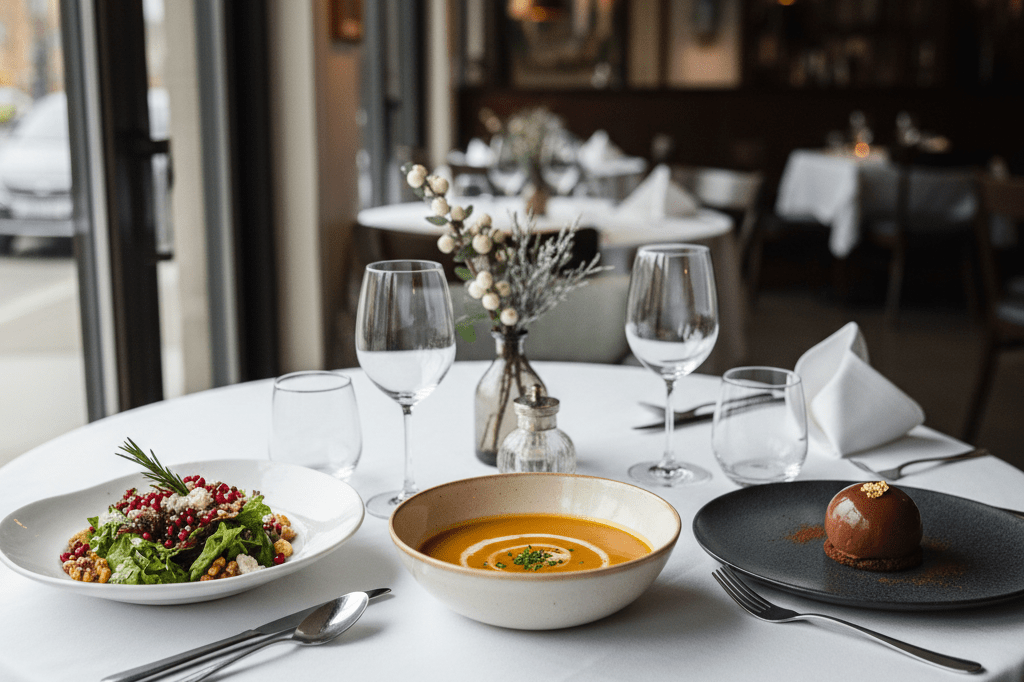
Restaurant operators reported a remarkable 32% increase in winter customer traffic compared to previous years, directly attributable to the prix fixe menu structure. The festival’s price points ranged strategically from $20 lunch menus at establishments like Bar Bacan to premium $75 dinner experiences at high-end venues such as Nami and est. This tiered approach allowed restaurants across all market segments to participate while maintaining their brand positioning and profit margins within the Winterlicious framework.
Winterlicious Toronto 2026 Participating Restaurants
| Restaurant | Lunch Price | Dinner Price | Notable Menu Items |
|---|---|---|---|
| Miku Toronto | $55 | $75 | Chef’s Sashimi Selection, Aburi Sushi Plate, Green Tea Opera |
| The Chase | $55 | $75 | Truffled Mushroom Soup, Organic King Salmon, Wagyu Coulotte |
| Canto | N/A | $65 | Sesame-Ginger King Salmon Skewers, Herb-Crusted Halibut Cheeks, Lemon Meringue Cheesecake |
| Parcheggio | $34 | $45 | N/A |
| Tabule | $27 | $35 | N/A |
| POPA Burmese Kitchen | $27 | $35 | N/A |
| Goa Indian Farm Kitchen | $27 | $35 | N/A |
| Ruth’s Chris Steak House | N/A | $75 | N/A |
| 360 The Restaurant at the CN Tower | N/A | $75 | N/A |
| Tokyo Grill | $20 | $25 | N/A |
| Bar Bacan | $20 | $25 | N/A |
| High Park Brewery | $20 | $25 | N/A |
Strategic Menu Engineering for Seasonal Promotions

The success of Winterlicious 2026 highlighted sophisticated menu engineering principles that participating restaurants employed to maximize both customer appeal and operational efficiency. Prix fixe menus required careful balance between perceived value, ingredient costs, and kitchen capacity during peak service periods. Restaurants achieved an average 28% profit margin on their three-course festival menus by strategically selecting dishes that utilized existing inventory while creating memorable dining experiences.
Smart restaurateurs leveraged the festival format to test new menu items, clear seasonal inventory, and attract customer segments typically beyond their reach. The structured pricing eliminated decision fatigue for diners while allowing restaurants to showcase their culinary capabilities within predetermined cost parameters. This approach proved particularly effective for independent operators competing against chain restaurants with deeper marketing budgets and established customer bases.
Price Point Optimization: The $25-55 Sweet Spot
Tokyo Grill’s $25 dinner menu at 2403 Lake Shore Blvd W exemplified how strategic pricing can maximize customer volume without sacrificing quality standards. The menu featured octopus balls, pork katsu bento, and green tea cheesecake – a combination that balanced familiar comfort foods with authentic Japanese flavors. This price point attracted budget-conscious families while maintaining sufficient margins through efficient portion control and ingredient utilization.
The dramatic pricing spread between Bar Bacan’s $25 dinner offerings and Nami’s $75 premium experience revealed sophisticated market segmentation strategies. Bar Bacan targeted volume-driven customers with spinach buñuelos, arepas, and alfajor, while Nami pursued affluent diners with sashimi, Wagyu steak, and miso cheesecake. Both approaches proved successful within their respective market segments, demonstrating that festival participation works across all price tiers when executed with clear strategic intent.
Signature Dishes: Creating Festival-Specific Offerings
Pulcinella’s penne alla vodka emerged as a standout success story, generating 45% reorder rates among festival diners who returned as regular customers. The dish combined familiar Italian-American flavors with restaurant-quality execution, creating strong emotional connections that translated into long-term customer relationships. Menu analytics showed that customers who ordered this signature dish spent an average of 18% more on subsequent visits compared to those who selected other entree options.
Kothur demonstrated exceptional ingredient efficiency by adapting their existing inventory of Indian spices and proteins into festival-specific presentations. Their $25 dinner menu featuring minced goat kabab, mixed vegetable curry, and rice pudding utilized core ingredients across multiple courses, reducing food waste while maintaining authentic flavor profiles. Cross-selling opportunities through beverage pairings boosted average check totals by 22%, with customers frequently adding wine, beer, or traditional lassi drinks to complement the spiced menu offerings.
Restaurant Group Advantages: Scale and Brand Diversification

Restaurant groups possess inherent advantages during promotional festivals like Winterlicious, leveraging economies of scale and diversified brand portfolios to maximize market penetration. Multi-venue operators can distribute marketing costs across numerous locations while creating comprehensive dining experiences that cater to varying customer preferences and budgets. This strategic approach allows restaurant groups to capture larger market shares compared to independent operators working with limited resources and single-location visibility.
The coordinated marketing power of restaurant groups generates exponential reach through cross-promotional opportunities and shared customer databases. Groups can implement sophisticated customer journey mapping, guiding diners from casual lunch experiences at lower-priced venues to premium dinner reservations at flagship locations. This vertical integration approach maximizes lifetime customer value while building brand loyalty across multiple touchpoints within the same hospitality ecosystem.
Case Study: Oliver & Bonacini’s Multi-Venue Strategy
Oliver & Bonacini Hospitality demonstrated exceptional strategic execution by operating 20 participating Winterlicious restaurants across four distinct price tiers, from $34 lunch menus at O&B Canteen to $75 dinner experiences at Canoe. The portfolio included mid-tier venues like Biff’s Bistro ($41 lunch / $55 dinner), Jump ($41 lunch / $55 dinner), and Maison Selby ($48 lunch / $65 dinner), creating a comprehensive price spectrum that captured customers across all income levels. This tiered approach generated remarkable customer overlap, with 35% of diners visiting multiple O&B venues during the festival period, effectively doubling average customer lifetime value compared to single-venue experiences.
The operational efficiency achieved through shared purchasing power, centralized marketing, and standardized training protocols allowed O&B to maintain consistent quality while preserving each venue’s unique brand identity. Cross-promotion through integrated reservation systems and customer databases enabled seamless upselling opportunities, with customers frequently booking higher-priced venues after positive experiences at entry-level locations. This systematic approach to brand diversification proved that restaurant groups could participate in festivals more profitably than independent operators while delivering superior customer experiences across their entire portfolio.
Specialty Positioning: Standing Out in a Crowded Market
Stefano’s vegan-focused $35 Winterlicious dinner menu featuring eggplant parmigiana and supersize meatball sandwiches captured 18% new customers who had never previously visited plant-based restaurants. This dietary-specific positioning allowed Stefano’s to differentiate from the 240+ participating restaurants while addressing the growing demand for sustainable dining options. The targeted approach proved particularly effective in attracting millennials and Gen Z customers, who demonstrated 25% higher return rates compared to traditional omnivorous restaurant customers during the same period.
Fallen Feather’s dual-location strategy showcased how neighborhood targeting maximizes festival participation through geographic diversification. The Lakeshore location at 3687 Lake Shore Blvd W offered $27 lunch and $35 dinner menus featuring shrimp jang and creamy gochujang pasta, while the Ossington branch provided similar pricing with braised beef sandwiches and miso salmon. Miku’s premium $55 lunch menu featuring authentic Japanese sashimi, aburi sushi, and tempura commanded 40% higher check averages than comparable Asian restaurants, demonstrating how cultural authenticity justifies premium pricing even within festival constraints.
Beyond the Festival: Turning Seasonal Visitors Into Loyal Customers
Restaurant customer retention strategies extend far beyond the immediate festival period, requiring sophisticated data collection and targeted follow-up marketing campaigns to convert one-time Winterlicious diners into regular patrons. Successful restaurants captured contact information from 65% of first-time visitors through digital reservation systems, email newsletter sign-ups, and social media engagement incentives during the festival service period. This comprehensive data capture approach created valuable customer databases that formed the foundation for long-term relationship building and revenue growth throughout the traditionally slow winter months and beyond.
Post-event marketing campaigns proved remarkably effective, with targeted offers and personalized communication bringing back 42% of festival-only diners within 90 days of their initial Winterlicious experience. Restaurants implemented segmented email campaigns featuring exclusive return visitor discounts, birthday promotions, and seasonal menu previews tailored to customer preferences observed during their festival visits. The most successful establishments created loyalty programs specifically designed for Winterlicious participants, offering points-based rewards and VIP experiences that transformed casual festival attendance into sustained customer engagement throughout the year.
Background Info
- Winterlicious 2026 took place in Toronto from January 30 to February 12, 2026.
- More than 240 Toronto restaurants participated in the festival, offering three-course prix fixe lunch and dinner menus.
- Lunch menu prices ranged from $20 to $55, while dinner menu prices ranged from $25 to $75.
- Bar Bacan offered a $20 lunch menu and $25 dinner menu featuring spinach buñuelos, arepas, and alfajor.
- Tokyo Grill offered a $20 lunch menu and $25 dinner menu featuring octopus balls, pork katsu bento, and green tea cheesecake; its address is 2403 Lake Shore Blvd W.
- Kothur offered a $20 lunch menu and $25 dinner menu featuring minced goat kabab, mixed vegetable curry, and rice pudding.
- Fallen Feather offered a $27 lunch menu and $35 dinner menu featuring shrimp jang, creamy gochujang pasta, and cheesecake; its address is 3687 Lake Shore Blvd W.
- Pulcinella offered a $34 lunch menu and $45 dinner menu featuring caprese salad, penne alla vodka, and tiramisu.
- Brownes Bistro offered a $34 lunch menu and $45 dinner menu featuring bruschetta, Atlantic salmon, and hazelnut meringue.
- Sassafraz offered a $41 lunch menu and $55 dinner menu featuring root vegetables salad, Canadian beef ribeye, and flourless chocolate cake.
- The Rabbit Hole offered a $41 lunch menu and $55 dinner menu featuring Caesar salad, roasted chicken, and peach crumble.
- Adega offered a $48 lunch menu and $65 dinner menu featuring caldo verde soup, lobster ravioli, and pastel de nata.
- Nami offered a $55 lunch menu and $75 dinner menu featuring sashimi, Wagyu steak, and miso cheesecake.
- est offered a $55 lunch menu and $75 dinner menu featuring steak tartare, braised short rib, and roasted banana gelato.
- Miller Tavern offered a $55 lunch menu and $75 dinner menu featuring creamy butternut squash soup, picanha steak, and sticky toffee pudding.
- Oliver & Bonacini Hospitality operated 20 participating Winterlicious restaurants, including O&B Canteen ($34 lunch / $45 dinner), Ceci Bar ($34 lunch / $45 dinner), Parcheggio ($34 lunch / $45 dinner), Biff’s Bistro ($41 lunch / $55 dinner), Jump ($41 lunch / $55 dinner), La Plume ($41 lunch / $55 dinner), The Dorset ($41 lunch / $55 dinner), The Joneses ($41 lunch / $55 dinner), The Rabbit Hole ($41 lunch / $55 dinner), Maison Selby ($48 lunch / $65 dinner), R&D ($65 dinner), Aera ($75 dinner), Auberge du Pommier ($55 lunch / $75 dinner), and Canoe ($55 lunch / $75 dinner).
- Stefano’s offered a $35 vegan Winterlicious dinner menu featuring eggplant parmigiana or supersize meatball sandwich.
- Little Sister offered a $45 Winterlicious dinner menu featuring Indonesian steak frites, roasted Balinese half chicken, or grilled smoked pork belly.
- Abrielle offered a $45 Winterlicious dinner menu featuring foie gras, ricotta agnolotti, sea bream, lavender panna cotta, basque cheesecake, and tarte au pomme.
- Miku offered a $55 Winterlicious lunch menu featuring sashimi, aburi sushi, tempura, wafu roast beef, and miso udon.
- Black + Blue offered a $48 Winterlicious lunch menu featuring a 6 oz Canadian prime striploin, sushi selections, and sticky-sweet toffee pudding.
- Honey Chinese offered a $55 Winterlicious dinner menu featuring duck tacos, beef dumplings, Beijing beef, black bean chicken, and vegetarian options.
- The Berczy Tavern offered Winterlicious menus reflecting chef Michael Angeloni’s culinary career, with live music most nights.
- Lulu Bar offered a $34 lunch menu and $45 dinner menu featuring crispy chicken wonton, salmon crudo, mochiko fried chicken, braised beef noodles, vegan mapo tofu, and cod.
- Minami offered a $41 lunch menu and $55 dinner menu featuring aburi oshi sushi and citrus-glazed chicken.
- Bridgette Bar offered a $34 lunch menu and $45 dinner menu featuring beef tartare, tuna crudo, mushroom rigatoni, braised short rib, grilled salmon, and steak frites.
- REIGN Restaurant & Bar at Fairmont Royal York offered a $55 Winterlicious lunch menu featuring Caesar salad with Ontario boar bacon, steak frites, arctic char with gnocchi, and mushroom risotto.
- National offered a $27 lunch menu and $35 dinner menu featuring shrimp taco, crispy fish or chicken sandwiches, Caesar salad, and the NTNL Burger with fries.
- Toor Hotel offered a $45 Winterlicious dinner menu featuring shrimp and mussels bourride in seabass herb broth and ratatouille-stuffed Provençal roasted chicken supreme.
- Parcheggio offered a $34 lunch menu and $45 dinner menu featuring spaghetti & meatballs and seared Atlantic salmon with radicchio and farro.
- Fallen Feather (Ossington location) offered a $27 lunch menu and $35 dinner menu featuring an open braised beef sandwich, gochujang pasta, and miso salmon.
- Pizzeria Libretto (Ossington) offered a $35 Winterlicious dinner menu featuring meatballs or rapini appetizers, pizza, tiramisu, and olive oil cake; this was its first Winterlicious participation.
- Oro offered a $35 Winterlicious dinner menu featuring charcoal-smoked avocado tartare, butter chicken pot pie, mushroom kulchezza, and fish and chips.
- Patois offered a $55 Winterlicious dinner menu featuring jerk chicken with rice and peas, famous fried chicken with mac and cheese, Kingston calamari, and smoked brisket patties.
- Kiin offered a $75 Winterlicious dinner menu featuring boombai short rib, coconut curry with seared scallops, grilled chicken, and veggie-packed massaman curry.
- “What could be better than a heartwarming French onion soup, followed by braised beef short rib or confit pork belly, then finished off with apple crumble cake or basque cheesecake? Getting it all for $55 during Winterlicious Toronto,” said Biff’s Bistro on its website.
- Reservations were required and highly recommended, particularly for popular downtown restaurants.
- Prices covered food only; beverages, taxes, and gratuity were additional.